Being a monk is a calling, a vocation. It is God who calls us to the monastic life. And every call from God is a gift. But how, then, can we know that God is calling us? First and foremost, through the desire of our heart. God alone is able to meet us in the depths of our being and to kindle within us the desire to follow him.
When someone feels drawn to monastic life, they are asked to embark on a process of discernment. This involves ascertaining whether this desire truly corresponds to a call from God. Through prayer, and by seeking the advice of a few experienced people who know them well, they will be able to test their desire and gain greater clarity regarding their intentions and abilities. If the desire persists, they may contact the novice master, the monk responsible for welcoming and training future monks.
Between a candidate’s arrival at the monastery and his final commitment to the community, there is a long probationary period in the part of the monastery set aside for the formation of brothers wishing to join us: the novitiate. This probationary period begins with the pre-postulate, during which the brother in formation devotes most of his study time to learning Latin. After this year of studying Latin, he will be able to move on to the postulate and begin to deepen his understanding of monastic tradition and spirituality, guided by the teaching of the novice master. Then begins for him a final year, known as the canonical novitiate, in order to bring his discernment to completion and strengthen his resolve to live the life he has chosen.
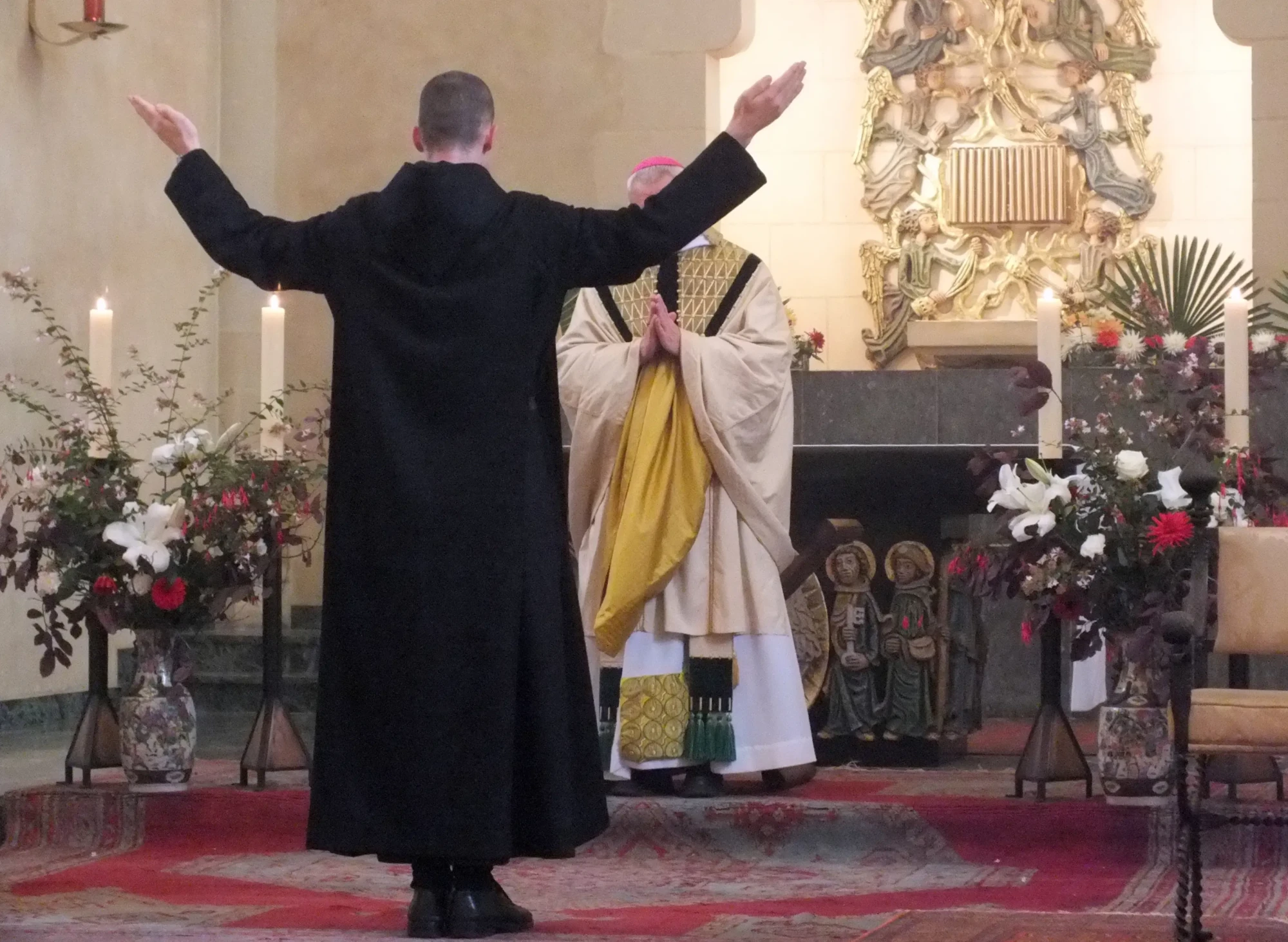
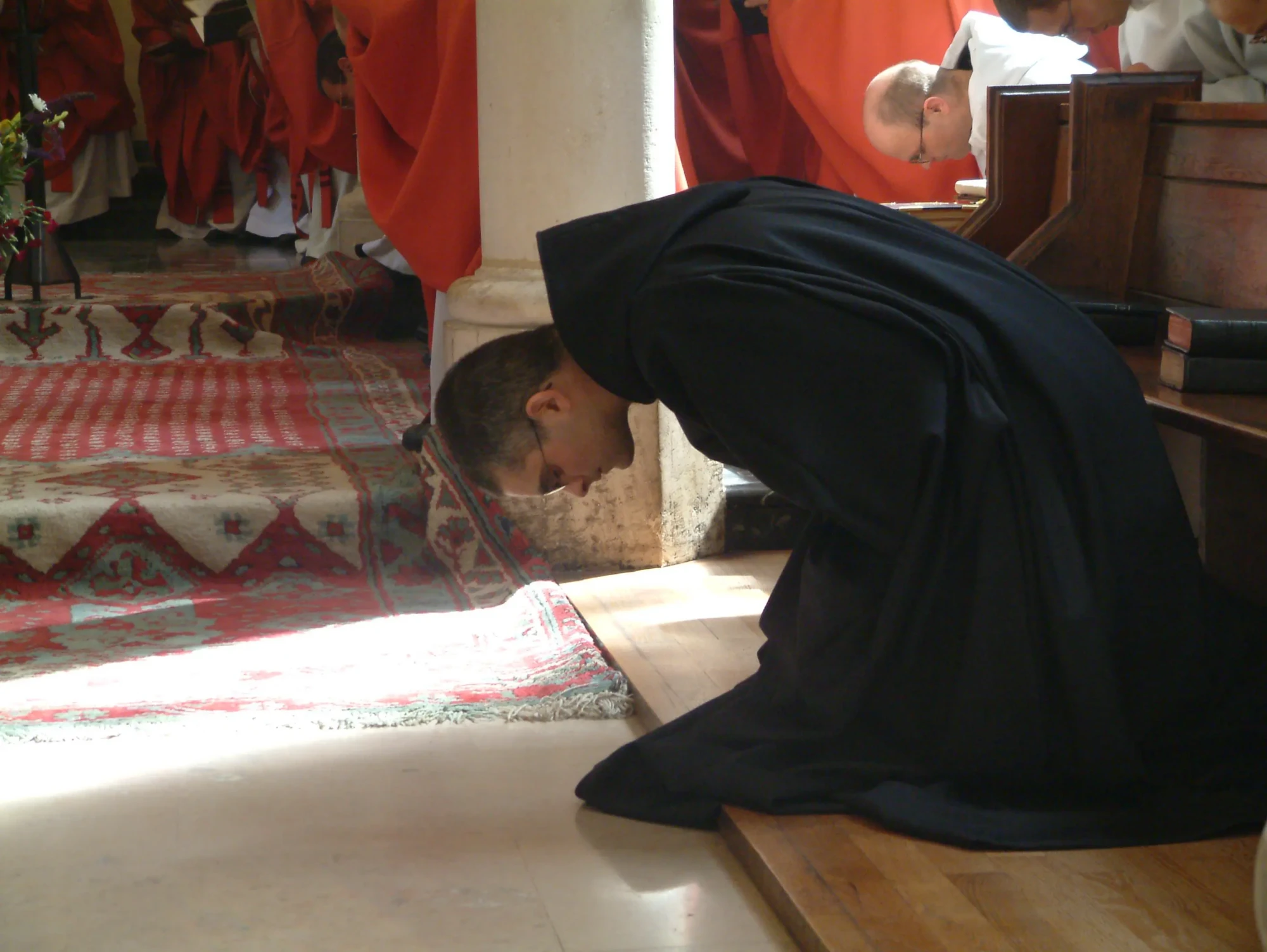
It is therefore at the end of at least three years that the brother may make an initial commitment for three years by formally requesting admission into the community. Following a favourable vote by the conventual chapter, he takes his first vows, though he must already have in his heart the intention to commit himself for ever. Through obedience, the conversion of his life and stability—the three vows that form the substance of his commitment—he places his life in God’s hands to live and grow within this community.
At the end of this three-year period – that is, at least six years after entering the community – he will be able to make his permanent profession through the solemn profession, take his full place within the community and remain there until death. Some of us may then be called to holy orders to serve the Church and the community as deacons, and subsequently as priests.