The famous sculpted groups in the transepts of the abbey church are known as the ‘Saints of Solesmes’. As the monastery’s archives were destroyed during the Revolution, the identities of the sculptors who worked under the guidance of the priors of Solesmes remain unknown. Far exceeding the priory’s financial means, these masterpieces were no doubt donated by generous benefactors, who also remain unknown. They were spared from the destruction of the Revolution and preserved in our church on the express orders of Emperor Napoleon.
South transept: The Entombment of Christ (1496)
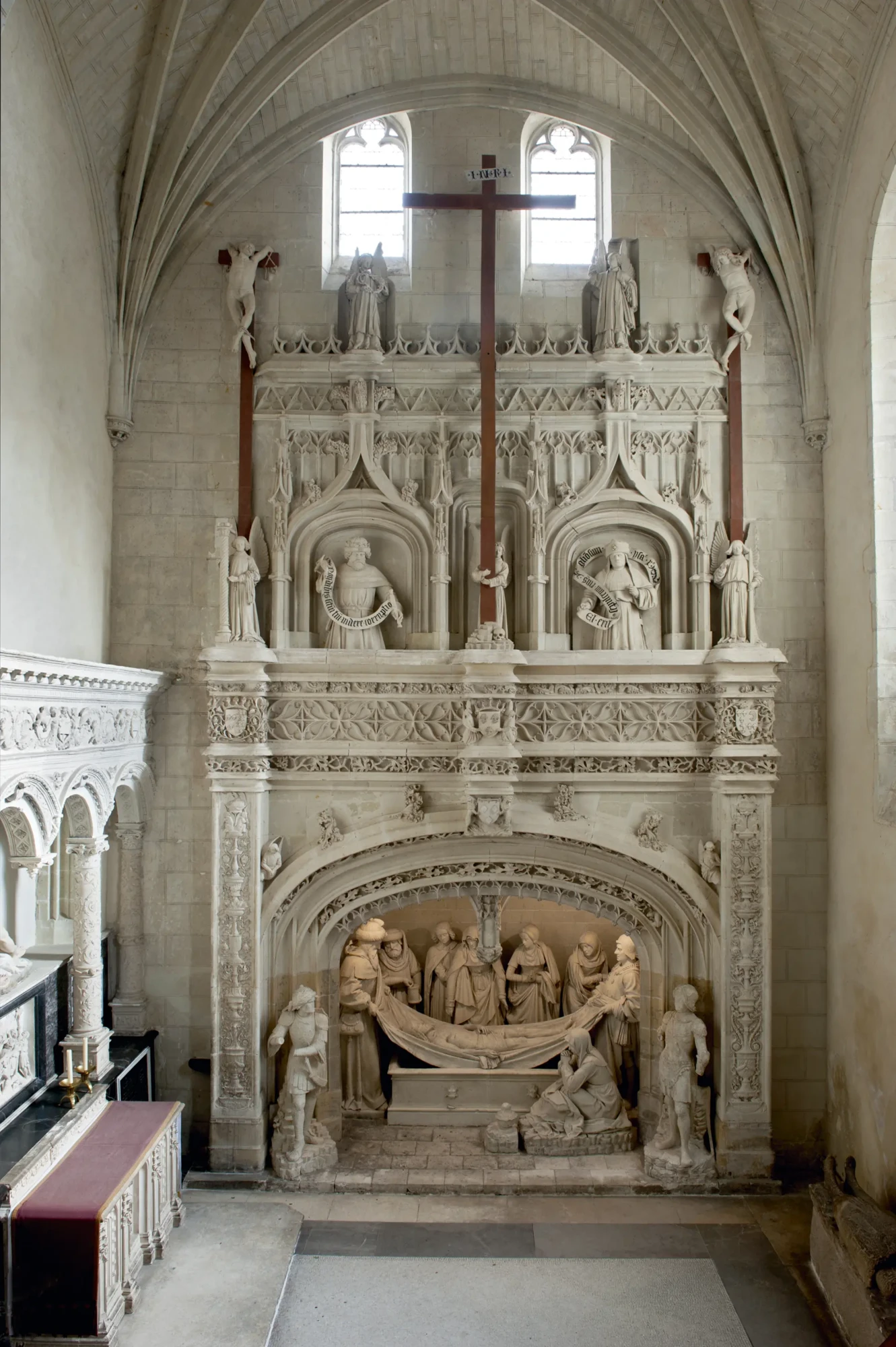
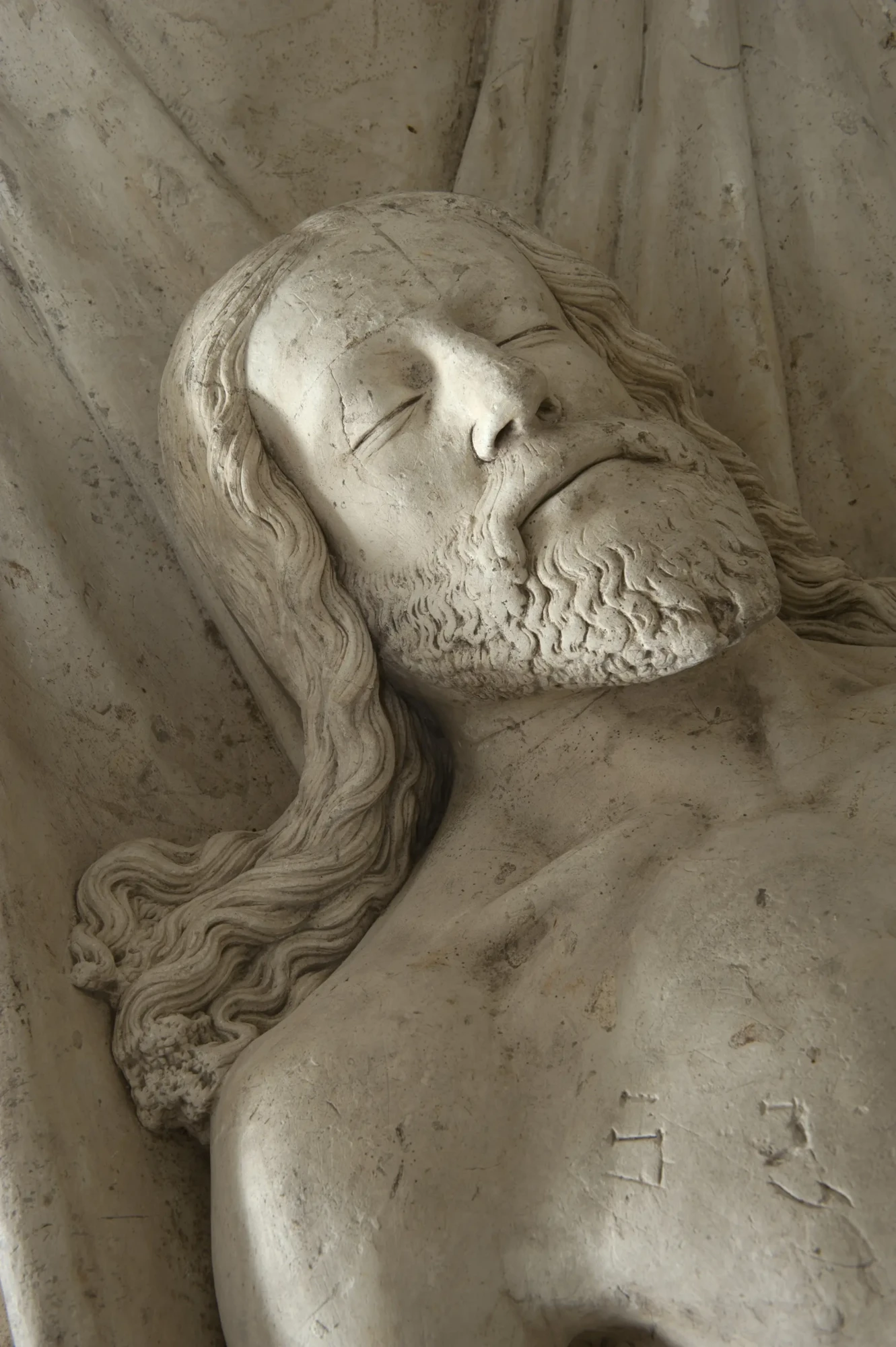
The tomb of Our Lord, in the south transept, was created around 1496. This date, inscribed on the right-hand pilaster, is confirmed by the coats of arms appearing on the entablature: those of King Charles VIII, his wife Anne of Brittany and the Dauphin Charles-Orland.
A reliquary monument
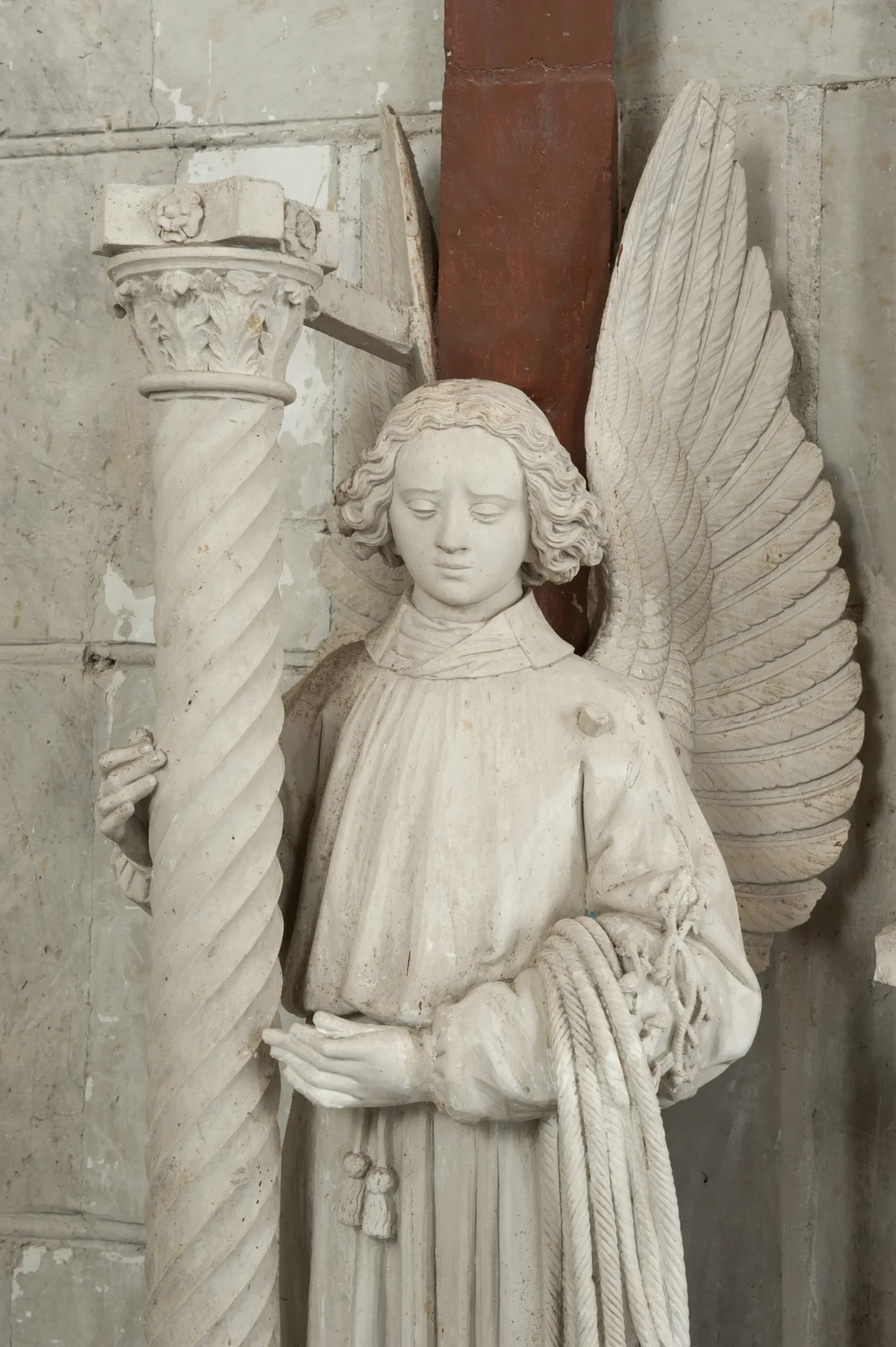
Intended to house the relic of the Holy Thorn in the hanging keystone of the lower section, this monumental reliquary is entirely devoted to the Passion and Resurrection of Christ. In the upper section, the cross stands alone—for the body has just been laid in the tomb—set against Calvary, symbolised by a skull. An angel clasped it in his arms. On either side are the crosses of the two thieves; on the left, an angel holds the pillar of the flagellation and the bonds, and on the right, an angel carries the spear and the reed. Above, two other angels hold Christ’s crown of thorns, the nails and his tunic.
In the niches of the upper register, the prophet Isaiah and King David are depicted from the waist up. Each holds a scroll in his hands. On David’s scroll—to whom the Book of Psalms is attributed—is inscribed: ‘You will not let your Holy One see decay’ (Psalm 16:10). On Isaiah’s scroll: ‘His tomb will be glorious’ (Isaiah 11:10). Two prophetic announcements of Christ’s resurrection. The monument does not merely evoke the death of Jesus: it is filled with the hope of his resurrection.
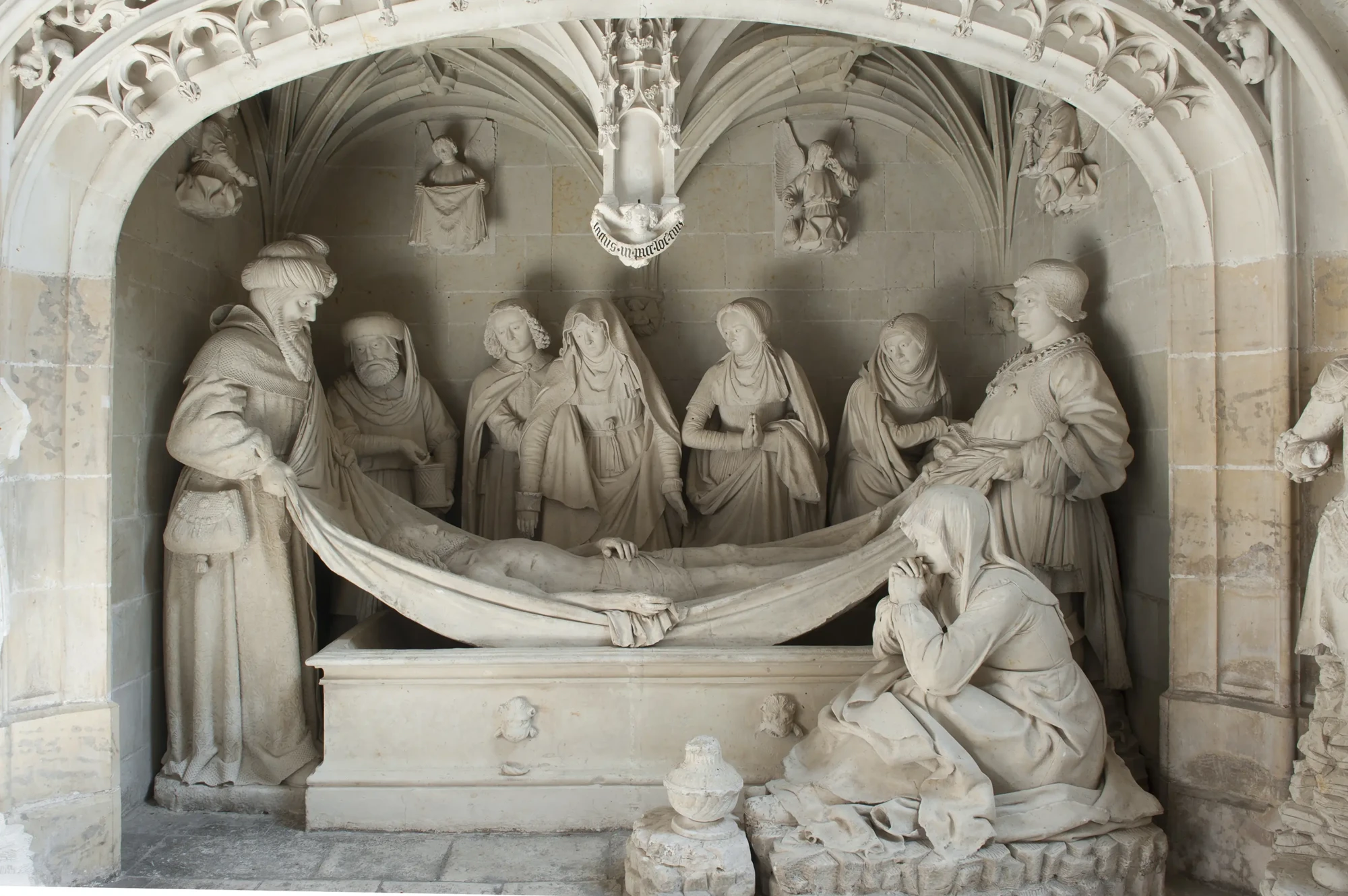
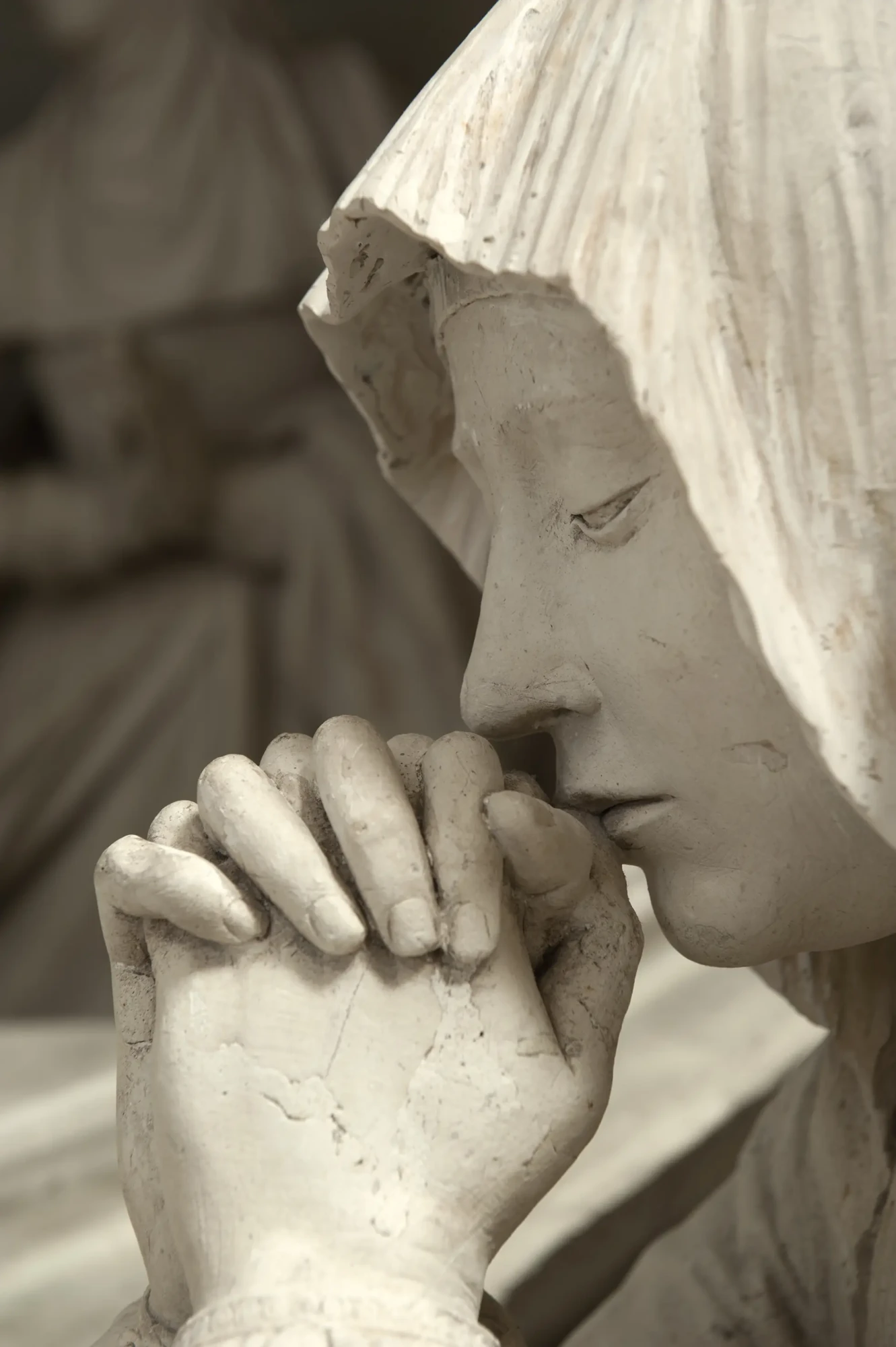
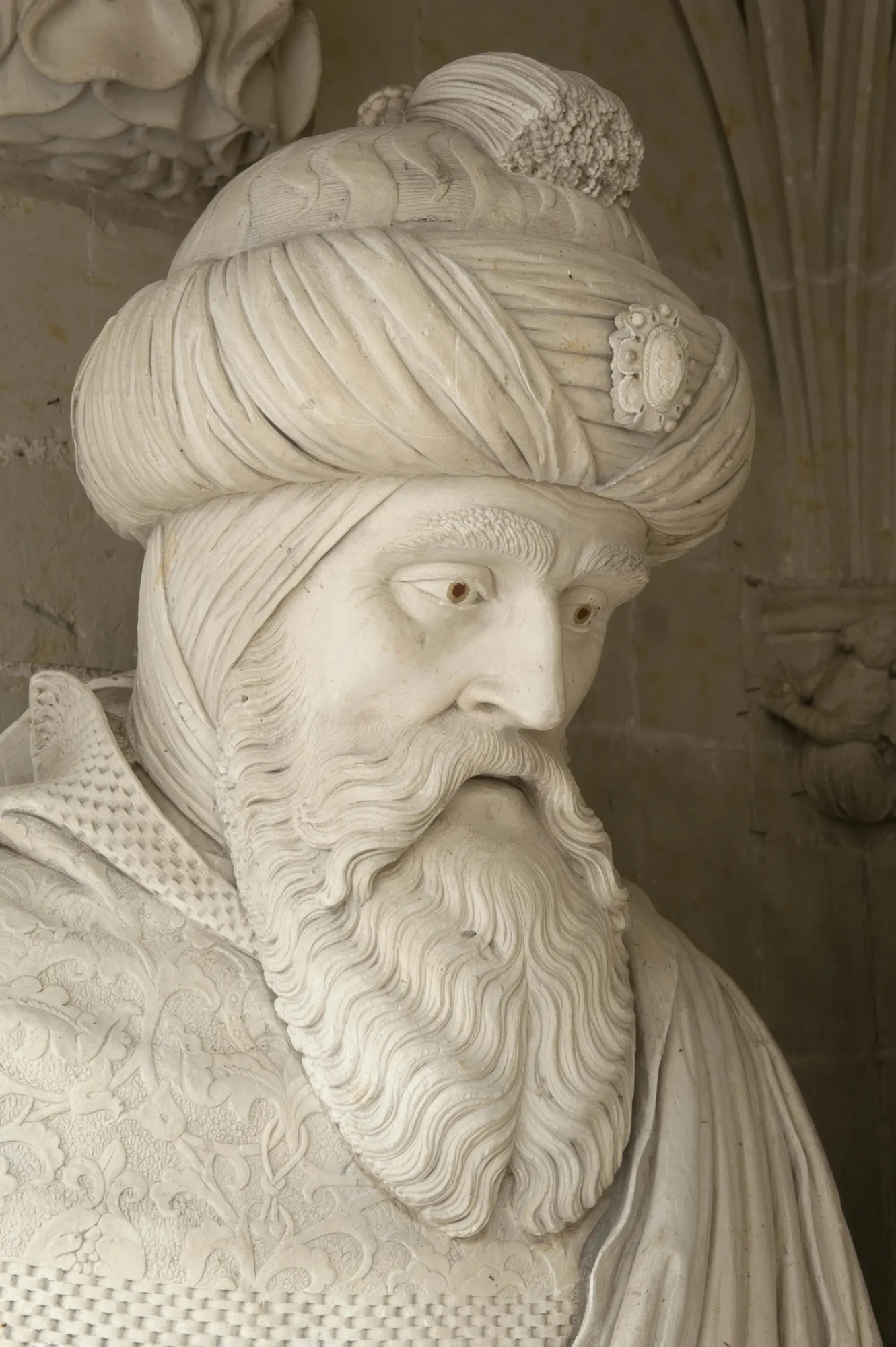
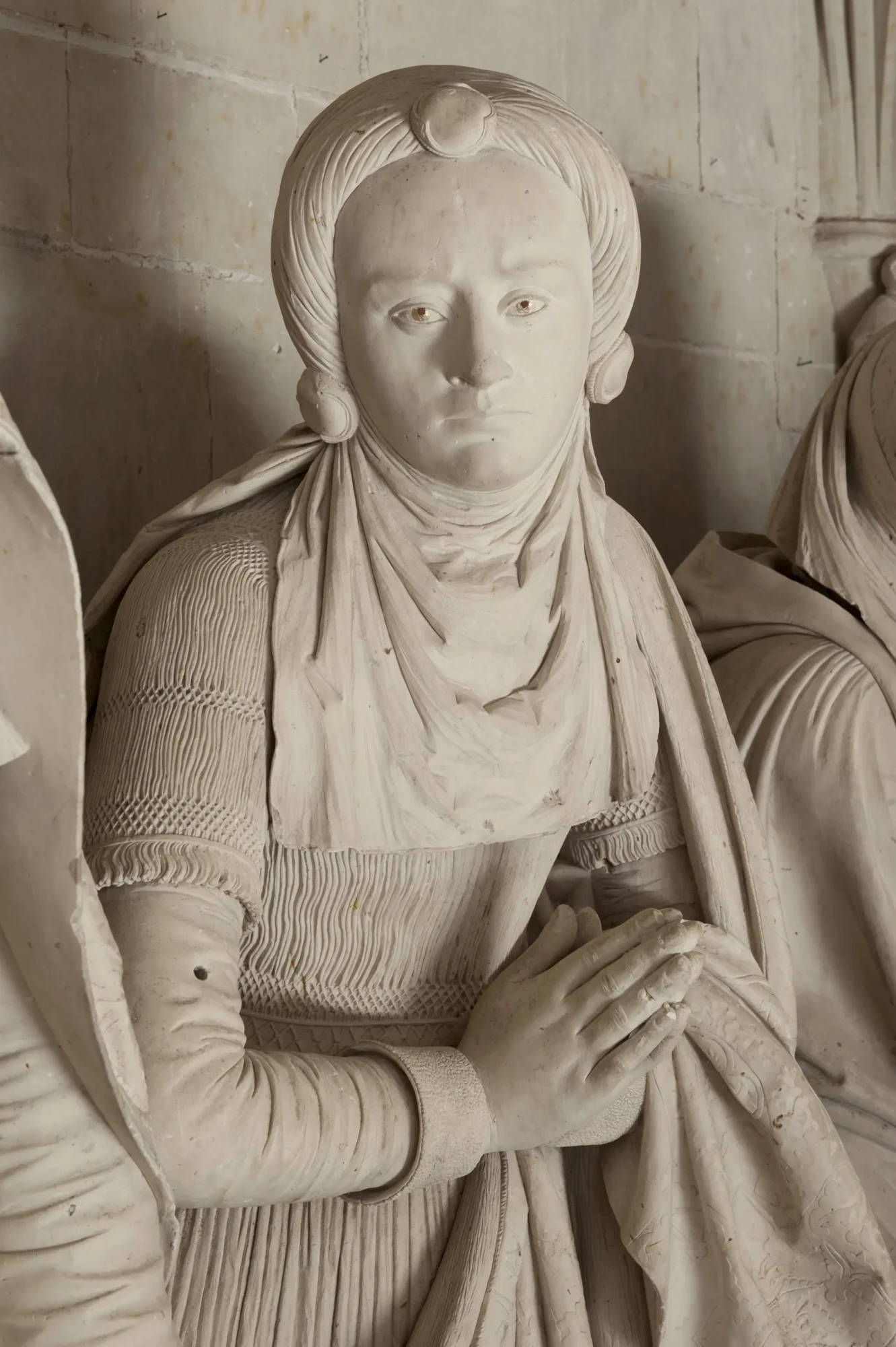
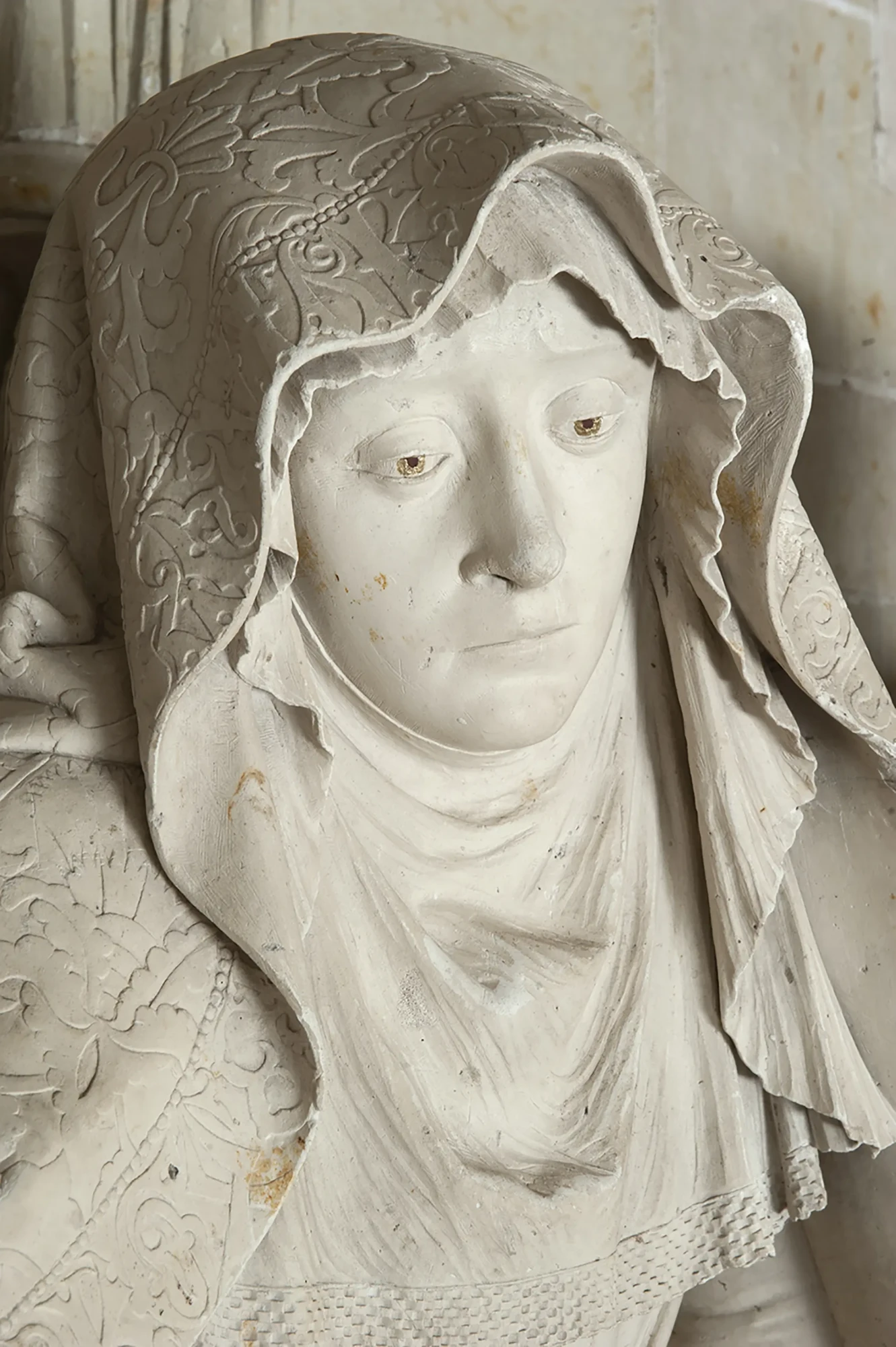
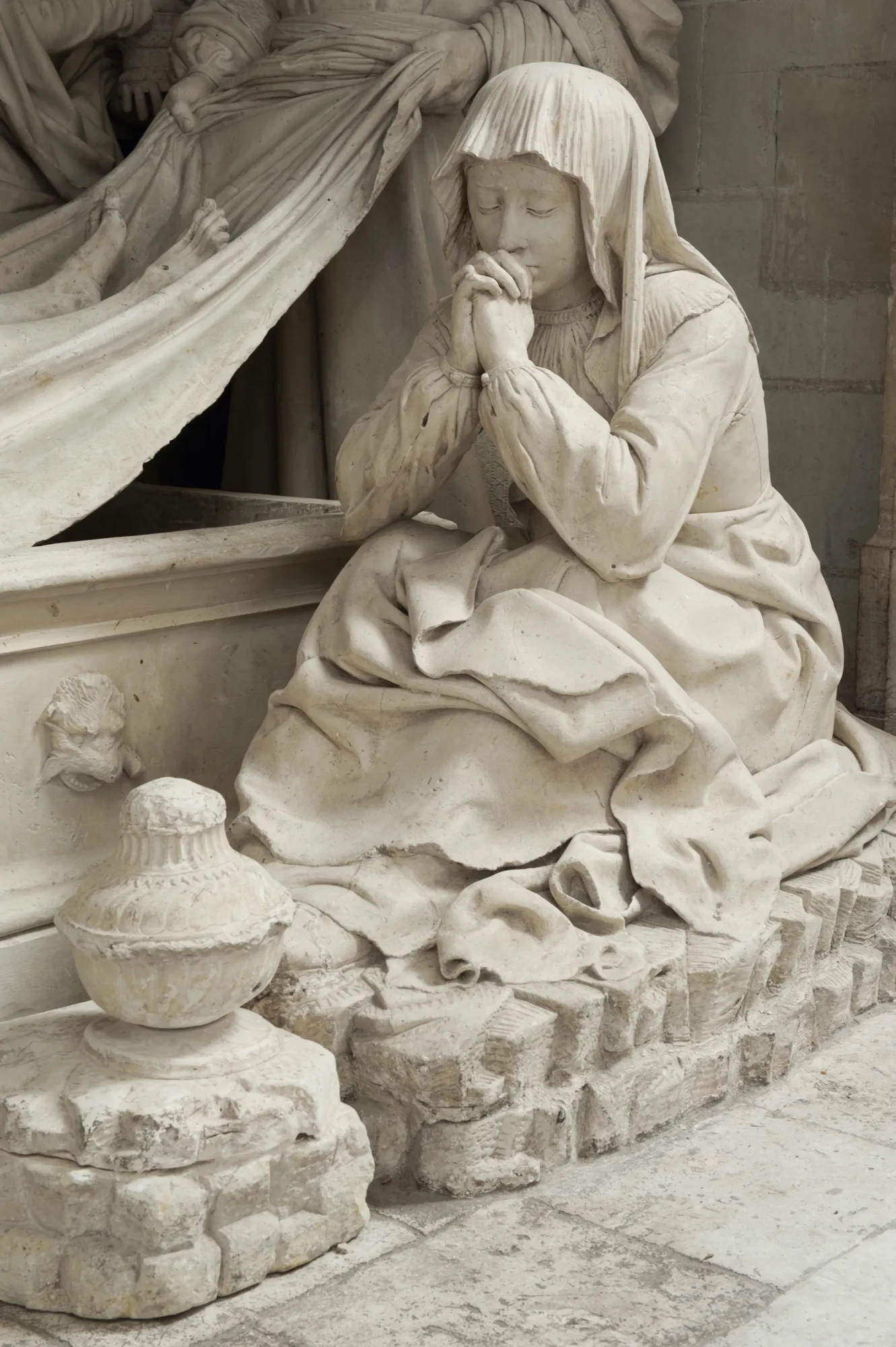
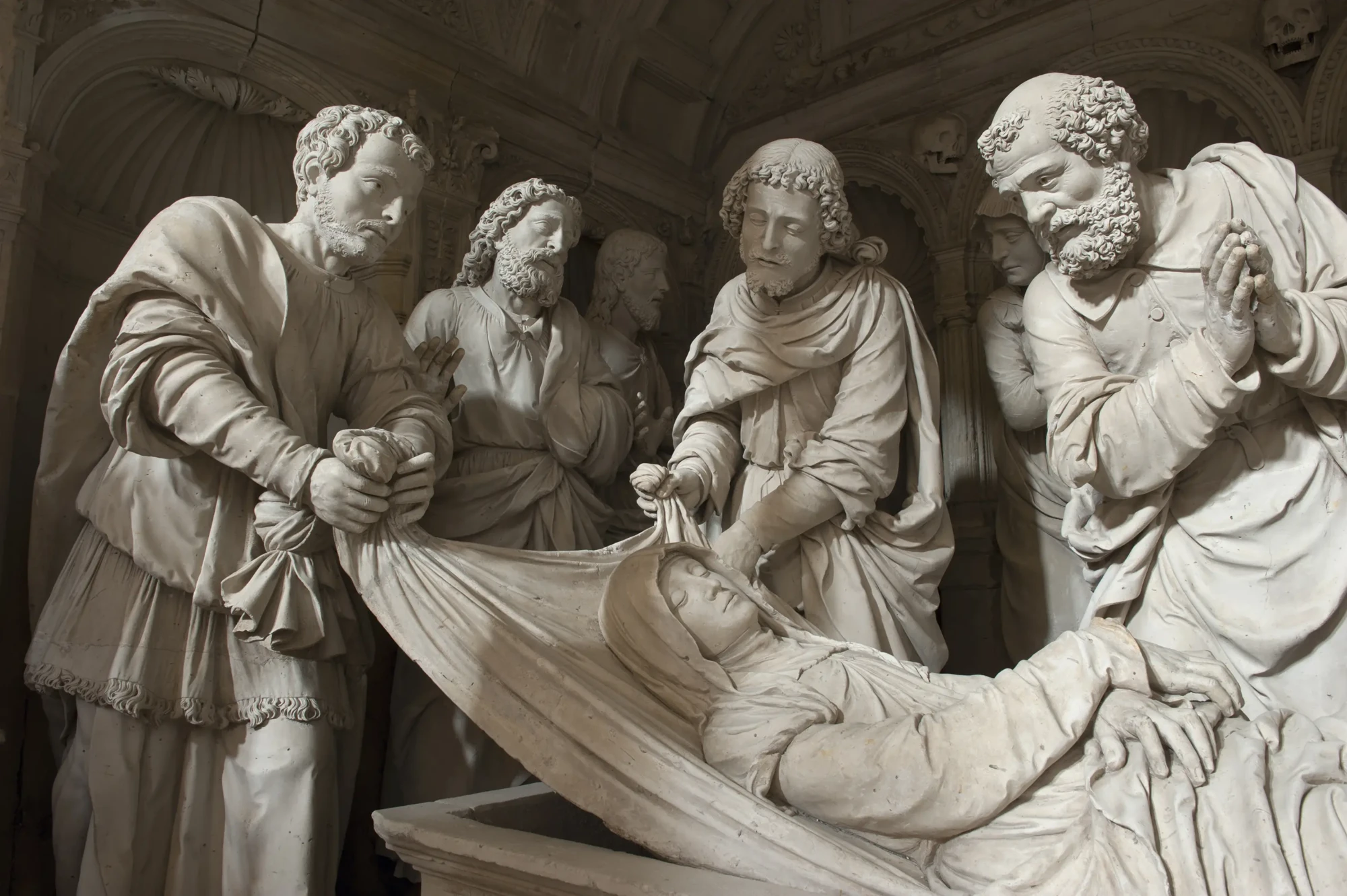
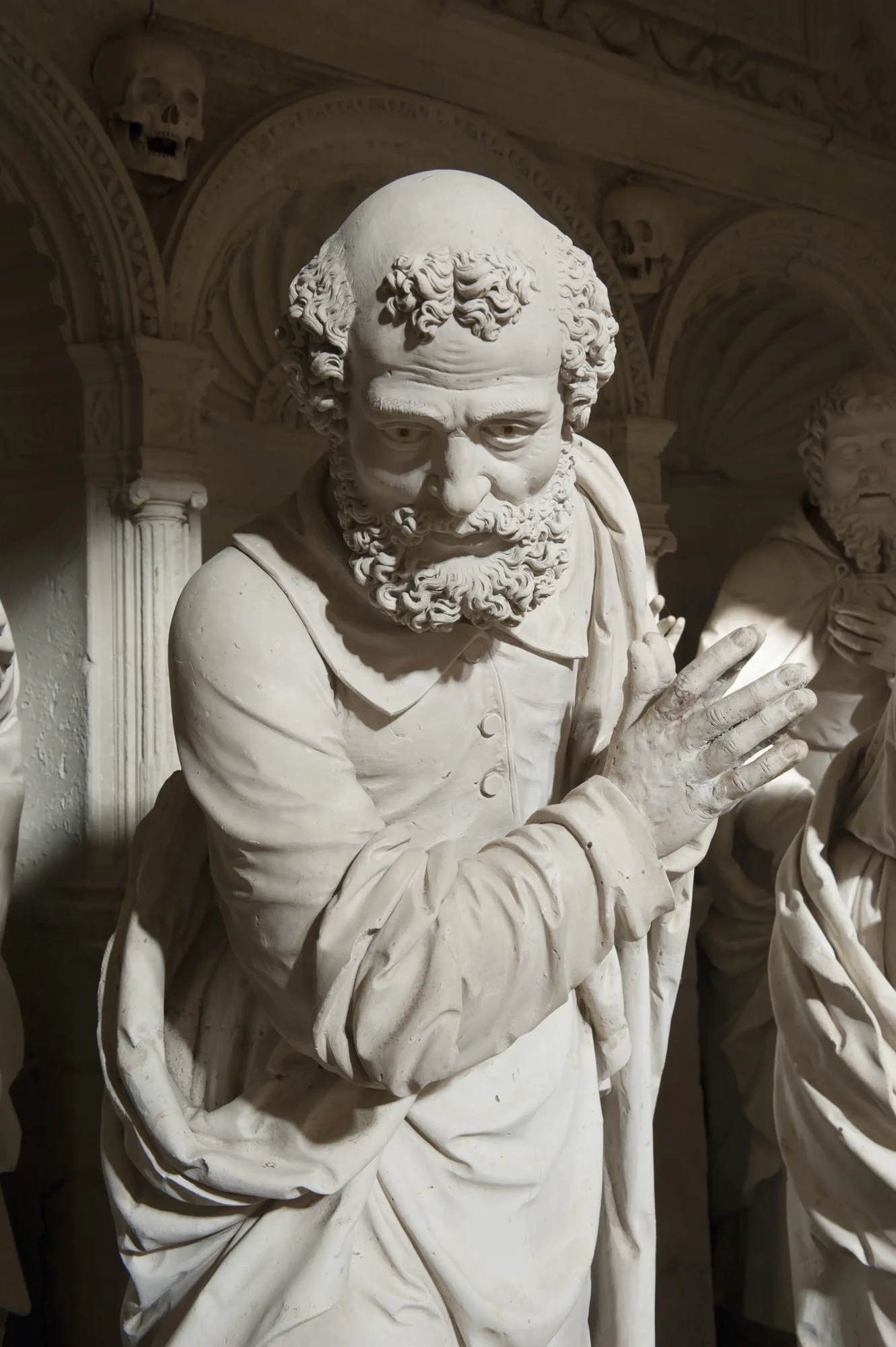
The lower section is devoted to the Entombment itself. Alongside Christ, various figures mentioned in the Gospels are depicted. All have their gaze turned towards the face of Christ: at his head stands Joseph of Arimathea, the owner of the tomb. At his side is a man whom tradition has identified as Nicodemus. Supported by Saint John, the Virgin Mary occupies a central position. To his left are two holy women: Mary, the mother of James, and Salome. A figure dressed as a knight stands opposite Joseph of Arimathea. He probably represents the patron who commissioned the artwork. Finally, at the foot of the tomb, seated in prayer, is Mary Magdalene. She is depicted as a penitent. Her serene face—the only one, apart from that of Christ, not marred by a frown—expresses her faith and her prayer. Mary, of whom Jesus said that ‘she has chosen the better part’ (Luke 10:42), is the model of the contemplative life. On either side, two Roman soldiers guard the tomb; pilgrims, in their excessive devotion, have broken their hands and hammered their faces.
To the left of the monument, above an altar, stands a Pietà in the Burgundian style. Its presence here is attested as far back as 1477.
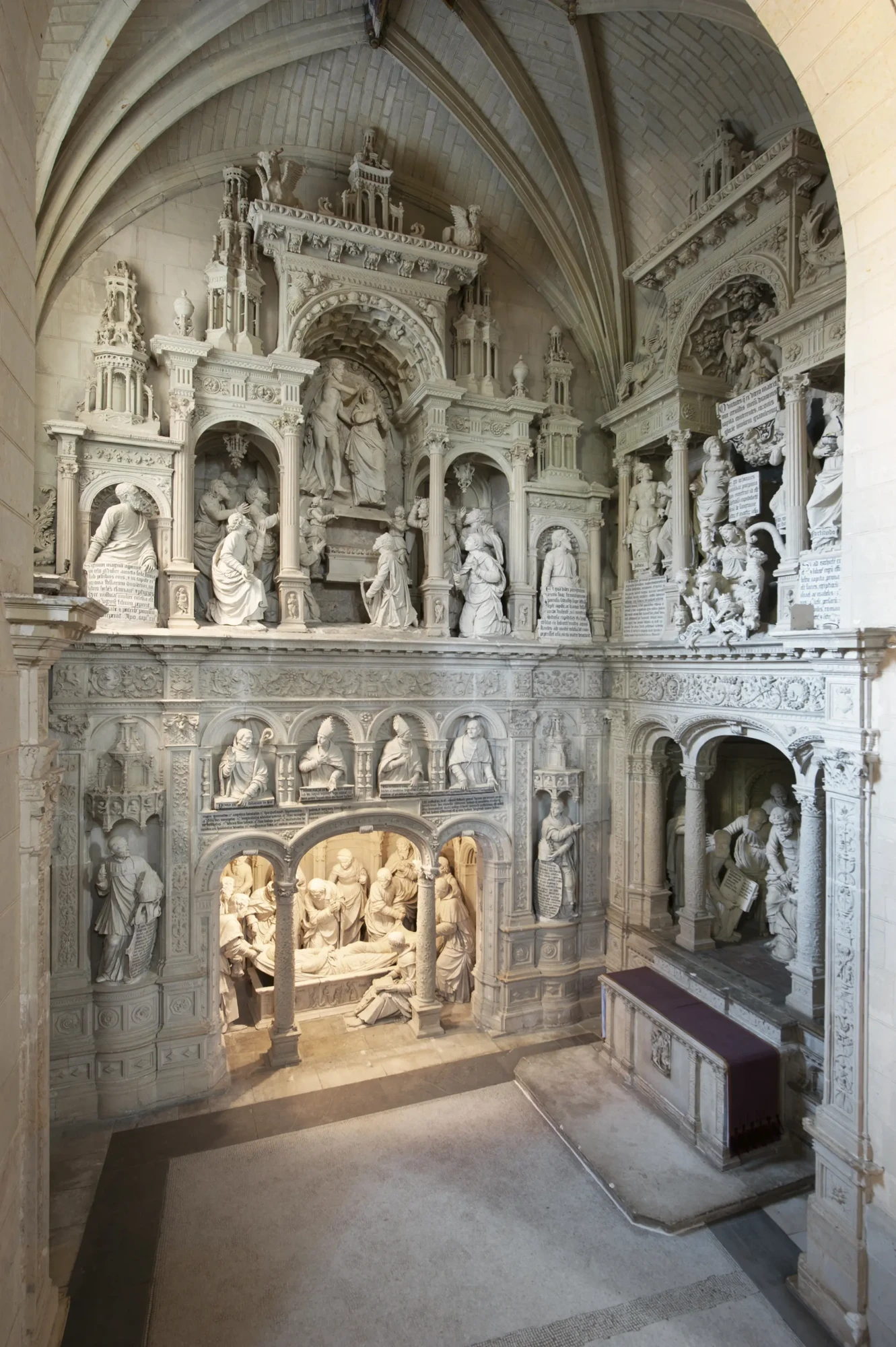
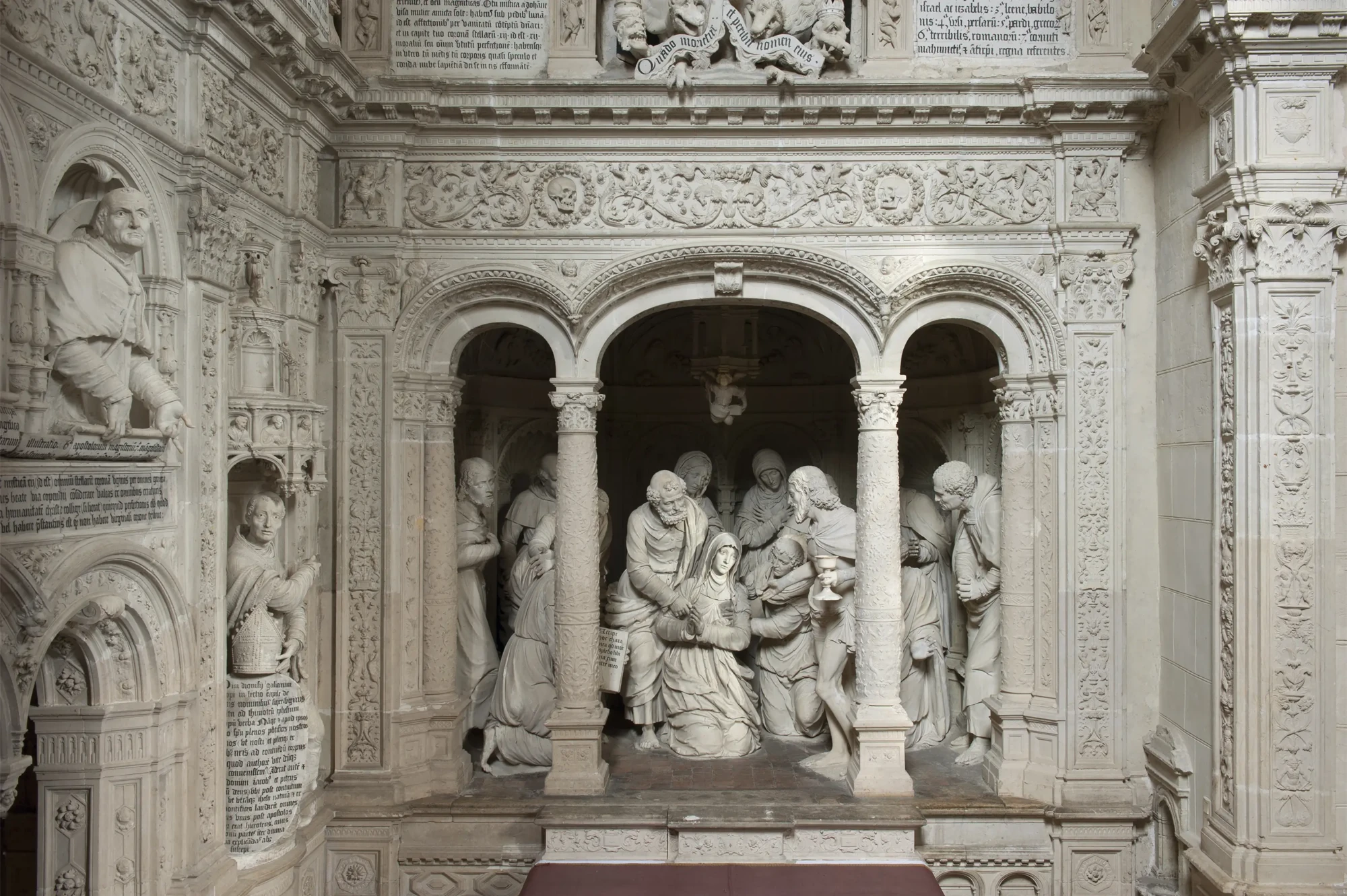
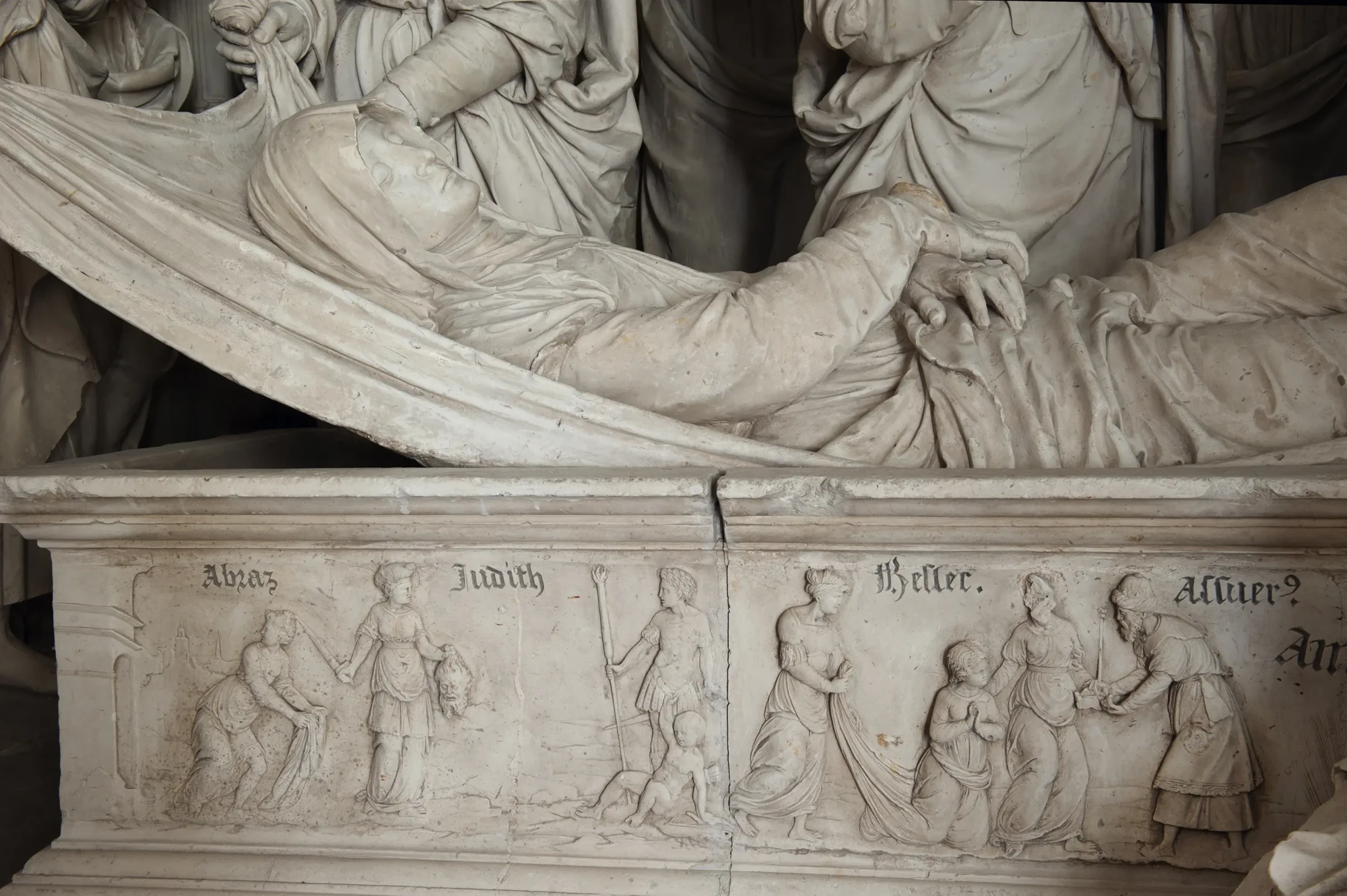
La Belle Chapelle, in the north transept, is entirely dedicated to the Virgin Mary. The Entombment of the Virgin was undoubtedly created in parallel with the Entombment of Christ in the south transept. The figure seated at the foot of the Virgin’s tomb echoes Mary Magdalene. And yet, the Belle Chapelle differs considerably from the tomb of Our Lord in style and spirit: movement and an abundance of decoration are its defining features. All this marks a turning point in the artistic era. Work, which undoubtedly began around 1530, must have continued at least until 1553, the date inscribed on the south colonnade. The complex ensemble extends over two levels and across the three sides of the transept.
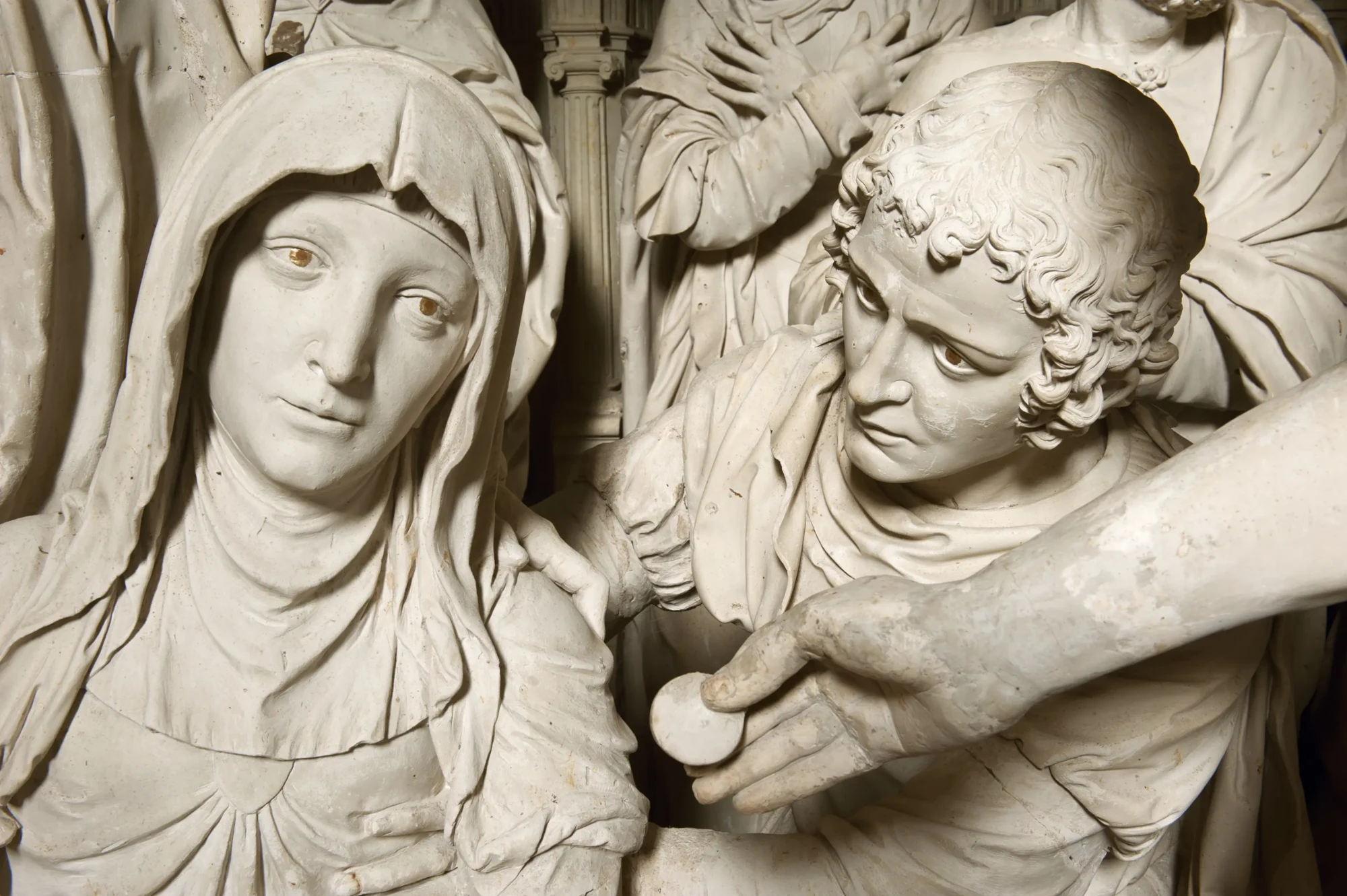
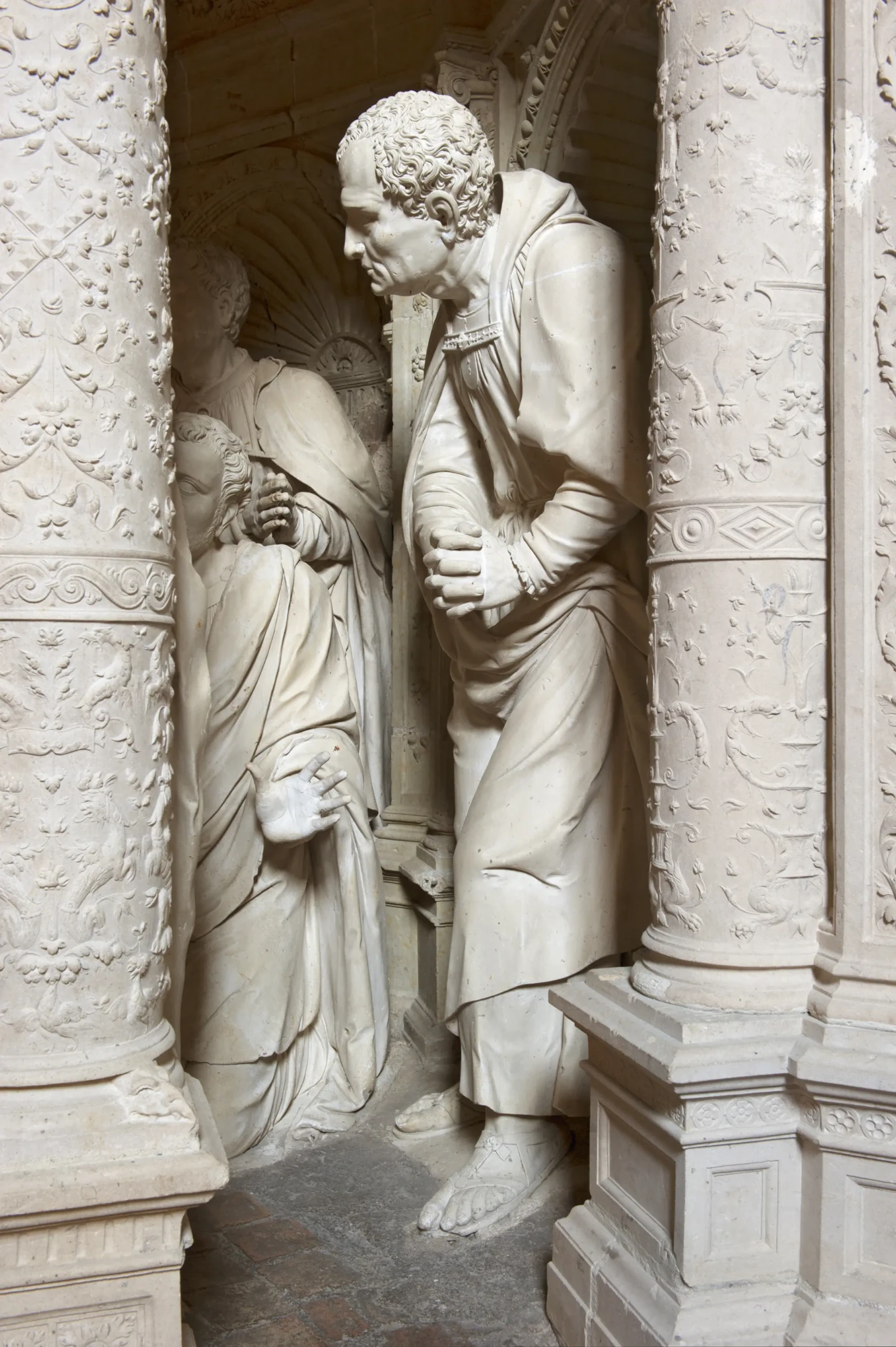
According to tradition, as attested by the apocryphal gospels as well as the Golden Legend, the apostles were present at the Virgin’s death. This was a death of love, an ecstasy or ‘fainting spell’. Here, Peter and John support Mary and, in an iconographic innovation, she receives Holy Communion from the hands of Jesus himself, who says to her: ‘Receive, my beloved, that which I shall soon bring to fulfilment with my Father’. Standing at either end of the north wall, discussing the Virgin’s death, are Saint Timothy and Saint Dionysius the Areopagite.According to Saint John of Damascus, they are said to have witnessed the event alongside the apostles.
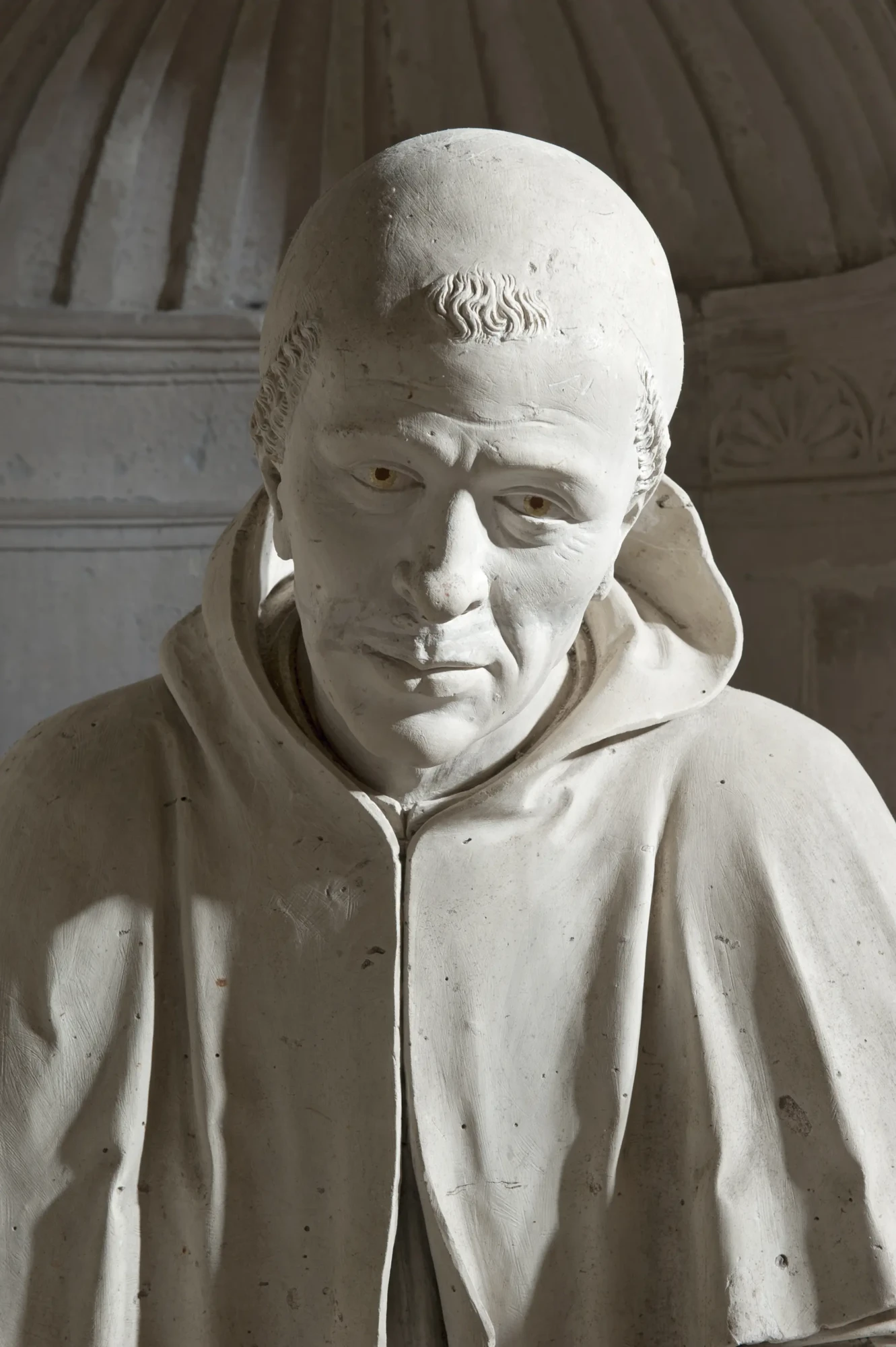
The scene is inspired by the Book of Revelation (12:1). The Virgin is depicted here as the woman of the Apocalypse: crowned with stars, she bears two eagle’s wings. Below, a procession of six young women symbolises the virtues of the Virgin. In the centre are the two virtues that shone most brightly in Mary: humility and ‘faith working through charity’. On either side are the cardinal virtues: on the right, fortitude and prudence; on the left, justice and temperance. Through these virtues, Mary has vanquished the Beast ridden by the great harlot of Babylon, as described in the Book of Revelation (17:1–6). At either end of the upper register of the north wall, two half-length figures present texts explaining our scene from the Book of Revelation. Four other figures, situated beneath the entablature of the north wall, fulfil the same role. According to tradition, which is based in part on the accompanying texts, they are, from left to right, Saint Bernard, Saint Anselm, Saint Augustine and Saint Bonaventure.
The scene is intended to be a replica of the Entombment in the south transept. Although the style is different, the peace and serenity of Christ’s face are reflected in that of the Virgin. The artist sought to show that the Virgin’s death was not a separation, but her entry into the life of God. This is what Christian tradition, particularly the Eastern tradition, also refers to as the Dormition.
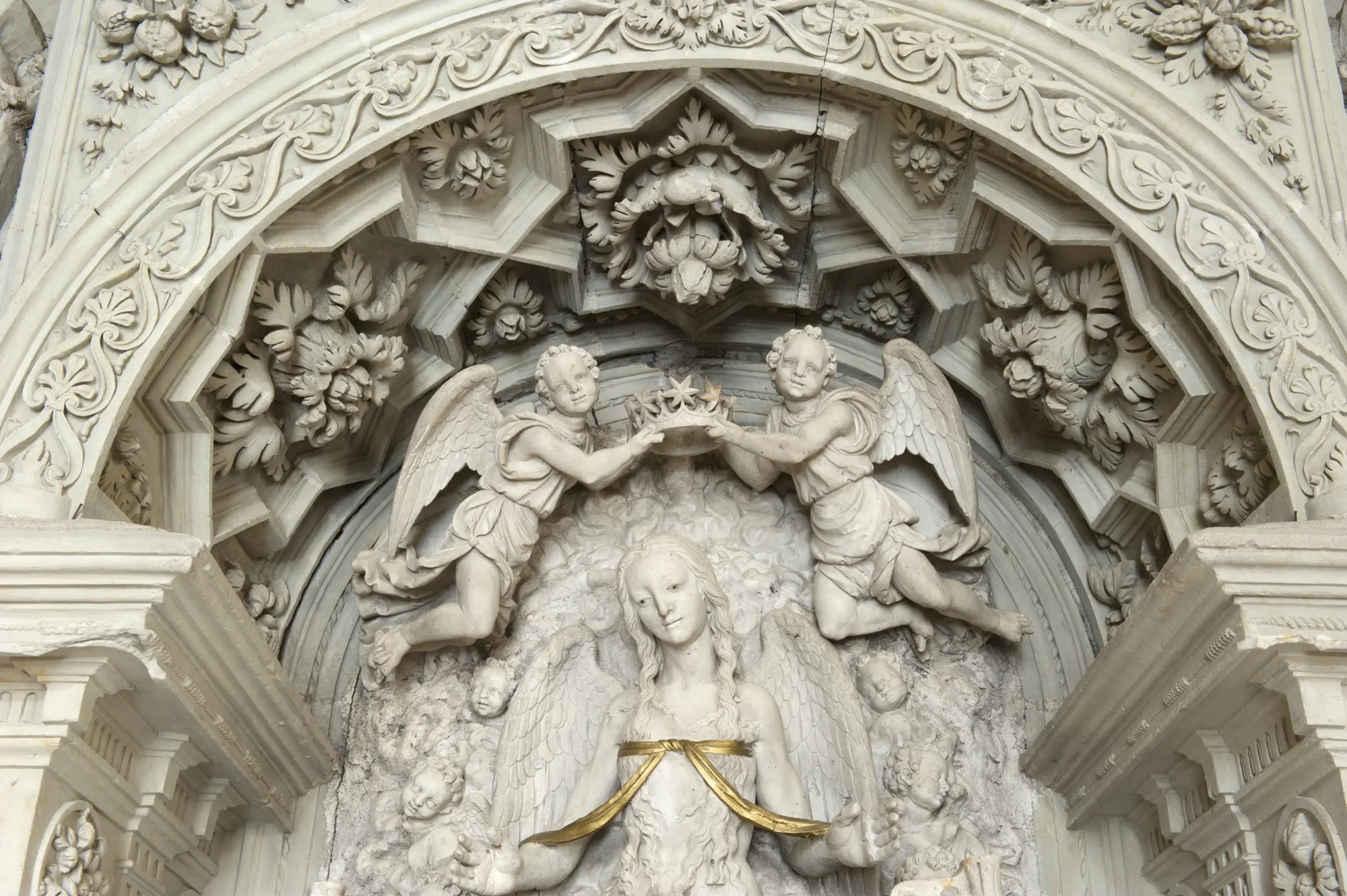
The Virgin enters heaven. There she is welcomed and led by Christ. Beneath her feet, two angels carry the Mercy Seat above the Ark of the Covenant. Indeed, tradition has seen in the Ark of the Covenant a foreshadowing of the Virgin, she who bore within her God present in the world. Kneeling before the scene, David plays the harp, whilst other figures join in his praise.
This wall features only one scene, in the upper register, depicting Jesus amongst the teachers. According to the Gospels, when Jesus was twelve years old, he remained in Jerusalem without his parents’ knowledge at the end of the annual pilgrimage. Retracing their steps, Mary and Joseph found him in the Temple, discussing with the teachers (Luke 2:41–52). The artist has mischievously depicted the teachers in the guise of the leading reformers of the sixteenth century.