The oldest part of our abbey church dates back to the 11th century; it was partially rebuilt in the 15th century, remodelled and finally extended in the 19th century.
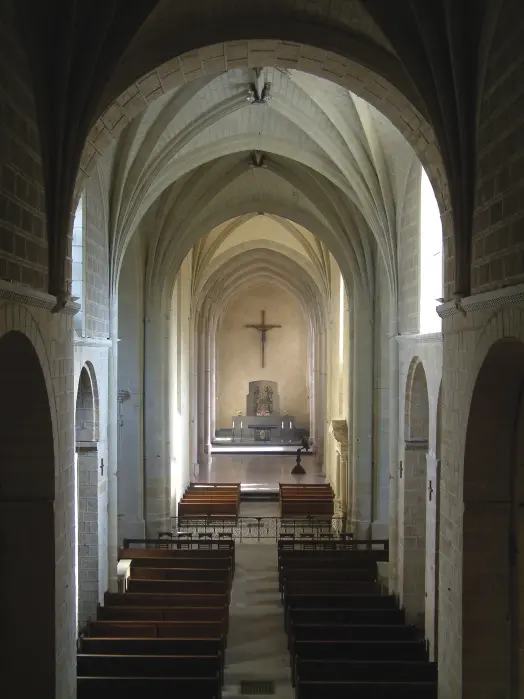
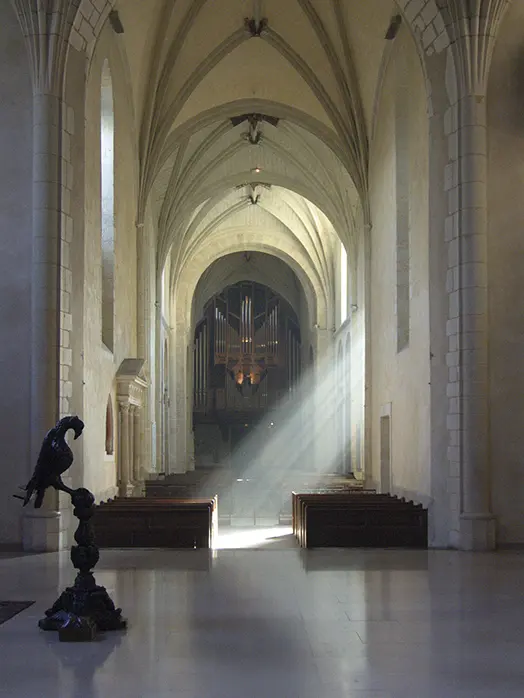
Narrow and long, the church consists of two adjoining sections: the nave for the congregation, which corresponds to the old church, dating mainly from the 11th and 15th centuries, and the monks’ choir, built by Dom Guéranger in 1865. Necessitated by the installation of the grand organ, the blocking off of the stained-glass window that once illuminated the rear of the nave now casts a shadow over several bays. However, it creates a delightful progression towards the light which, in the morning, floods the choir.
Originally, the church had two side aisles, which were destroyed during the Hundred Years’ War. The openings were subsequently bricked up. It was Dom Guéranger who, in the second half of the 19th century, reopened them to create the side chapels.
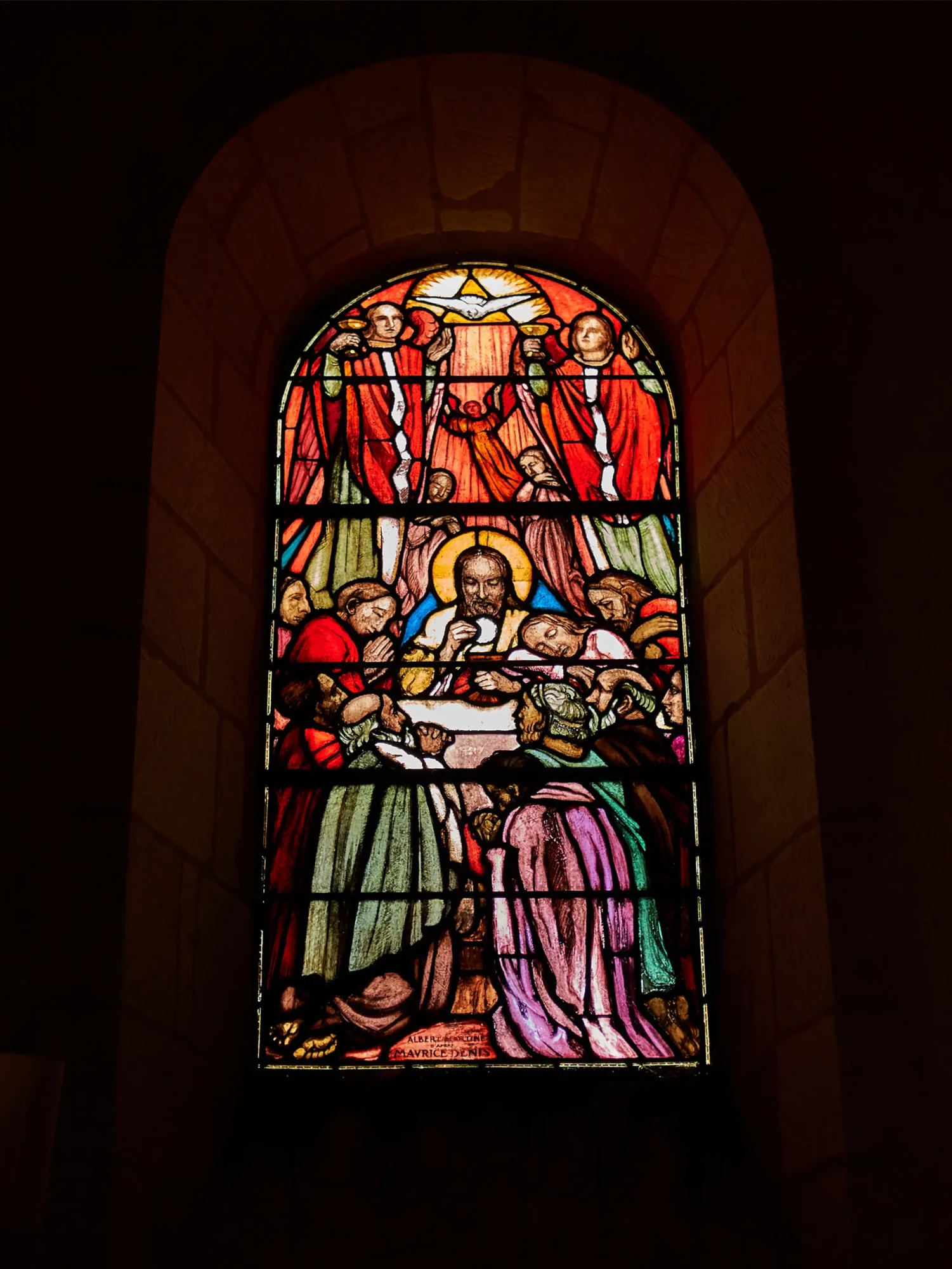
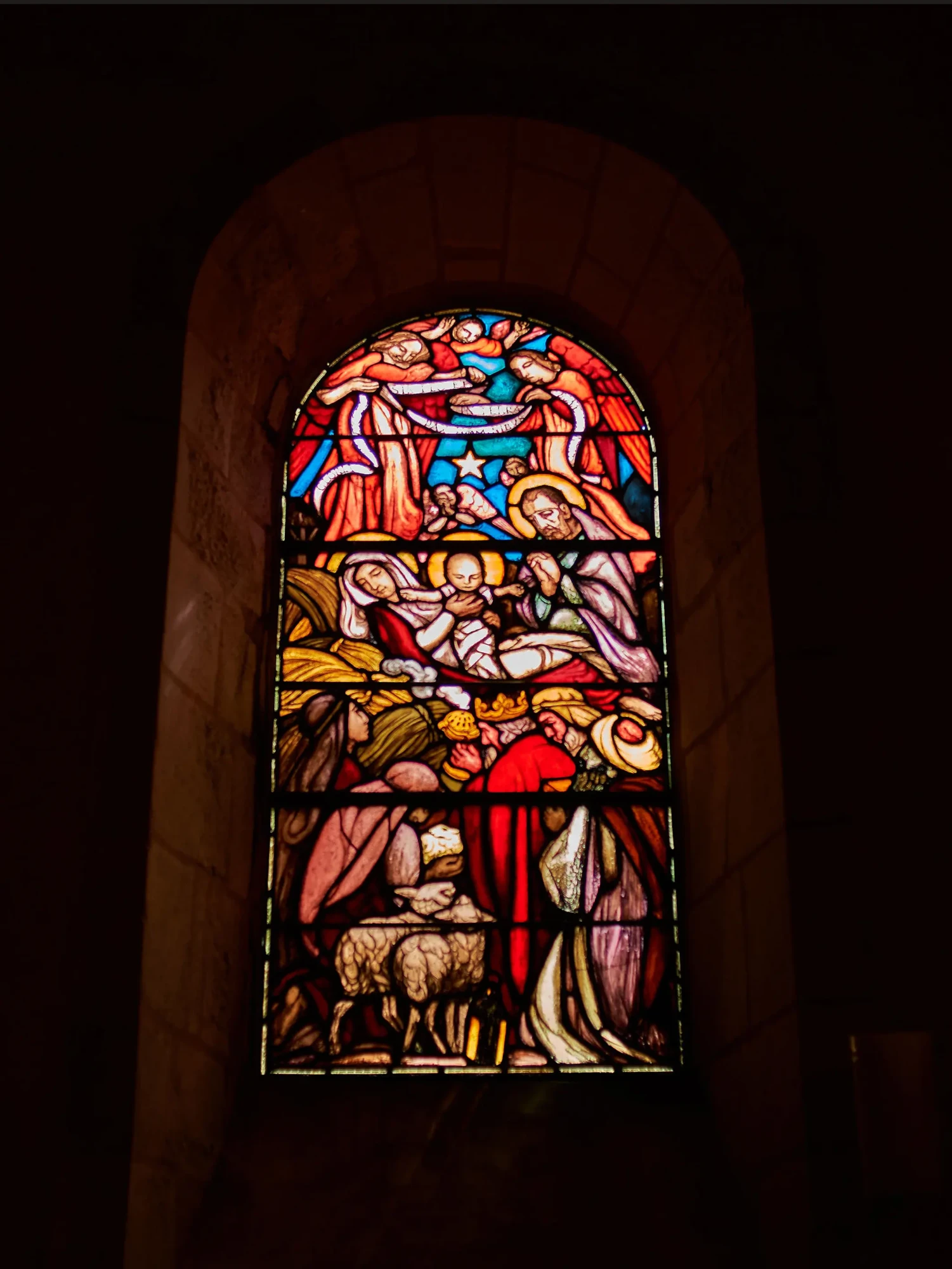
The chapels on the right-hand side are adorned with stained-glass windows, all dating from the 1930s. The largest, the Chapel of the Sacred Heart, features three stained-glass windows based on original designs by Maurice Denis. The stained-glass windows in the other four chapels are the work of Pauline Peugniez, who was his pupil.
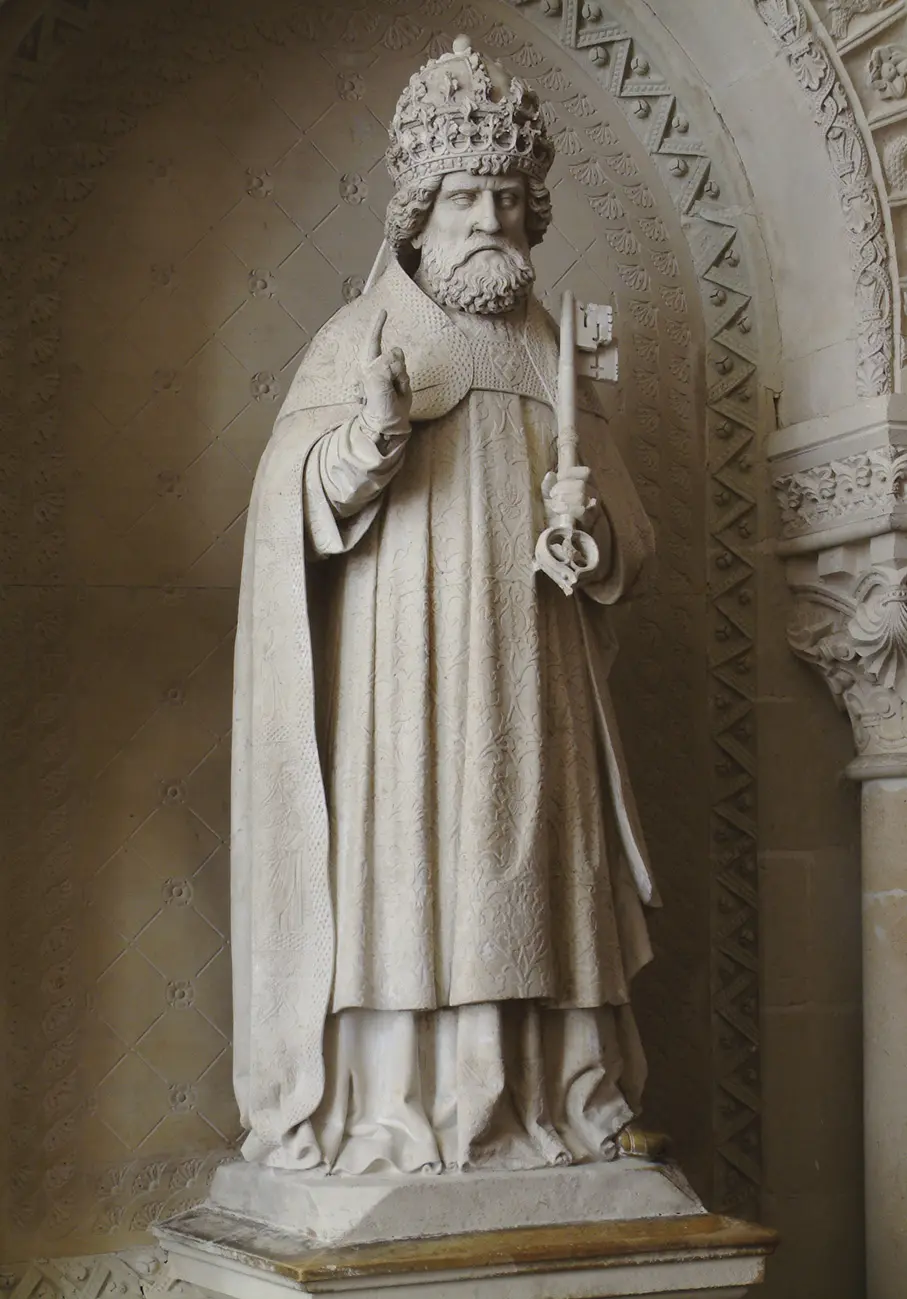
In the nave, beneath the bell tower, stands on the right a statue of Saint Peter, patron saint of the monastery, wearing the tiara and holding two enormous keys in his hands, in accordance with traditional iconography. Created at the end of the 15th century, it was erected in this spot by Dom Guéranger in 1870, to mark the definition of the dogma of papal infallibility. An inscription in Greek, Latin and French is engraved on the plinth, reproducing the text that once appeared beneath the famous statue of Saint Peter in Rome: ‘Behold the Word of God, the stone divinely hewn from gold. Established upon it, I am unshakeable’.
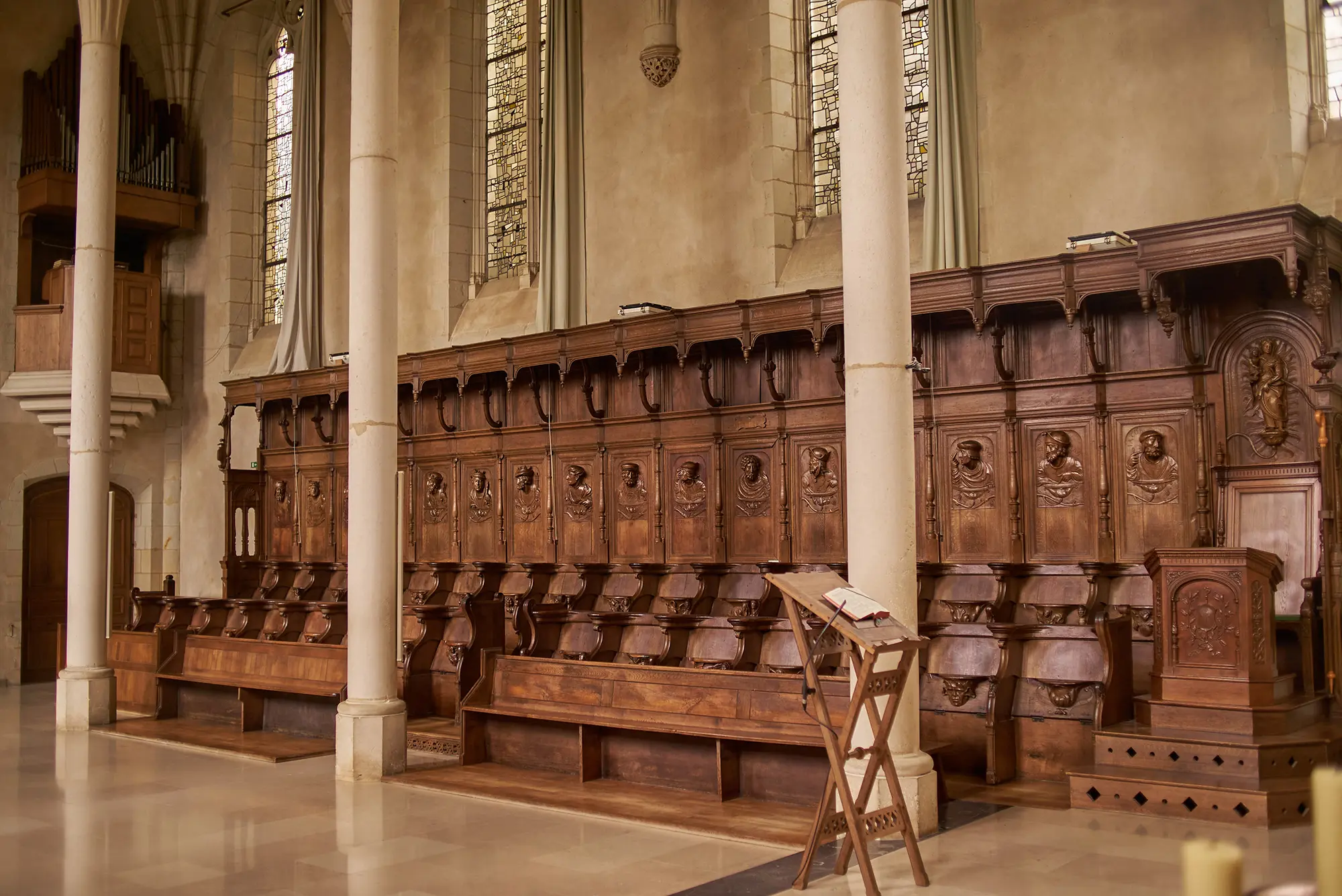
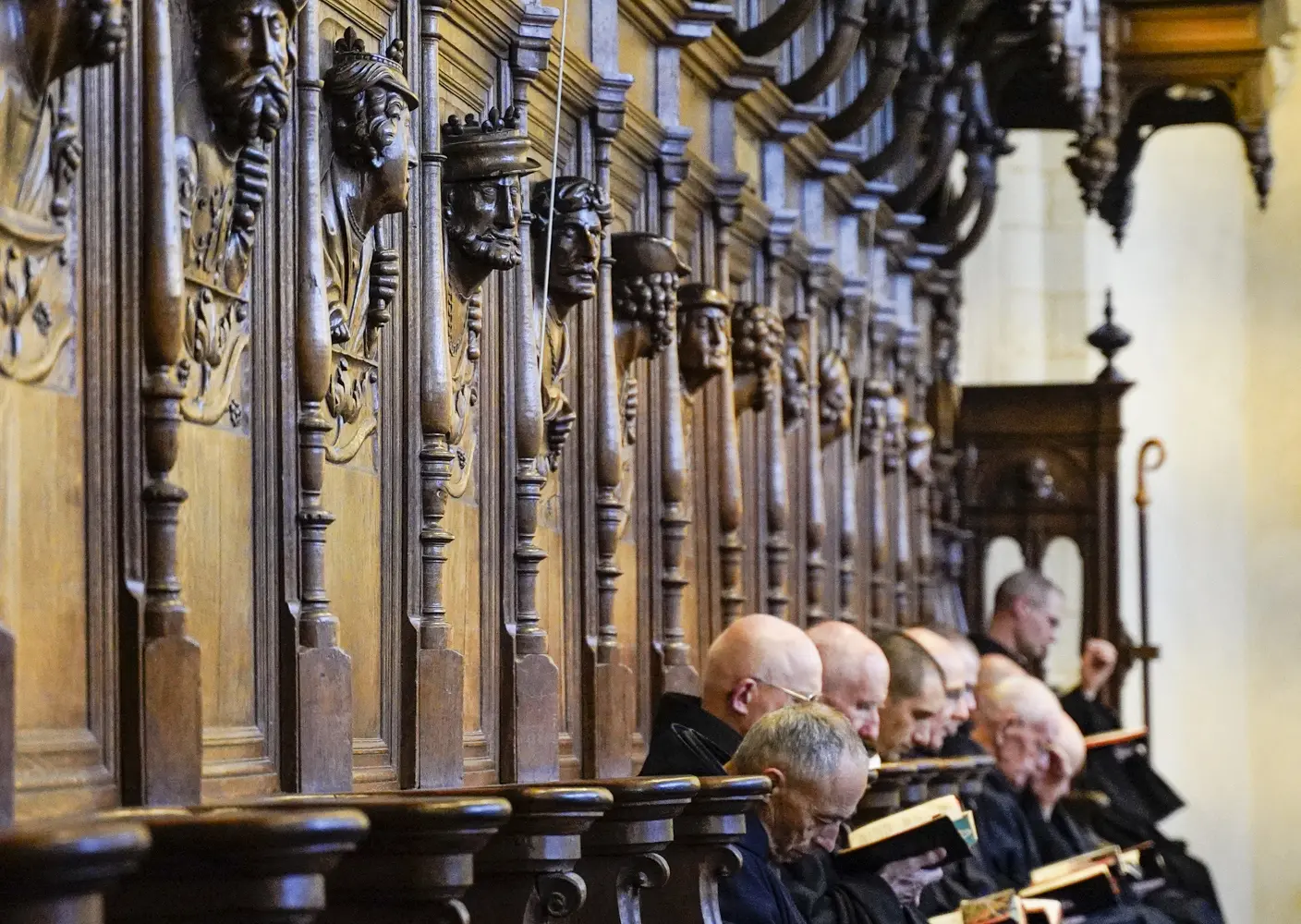
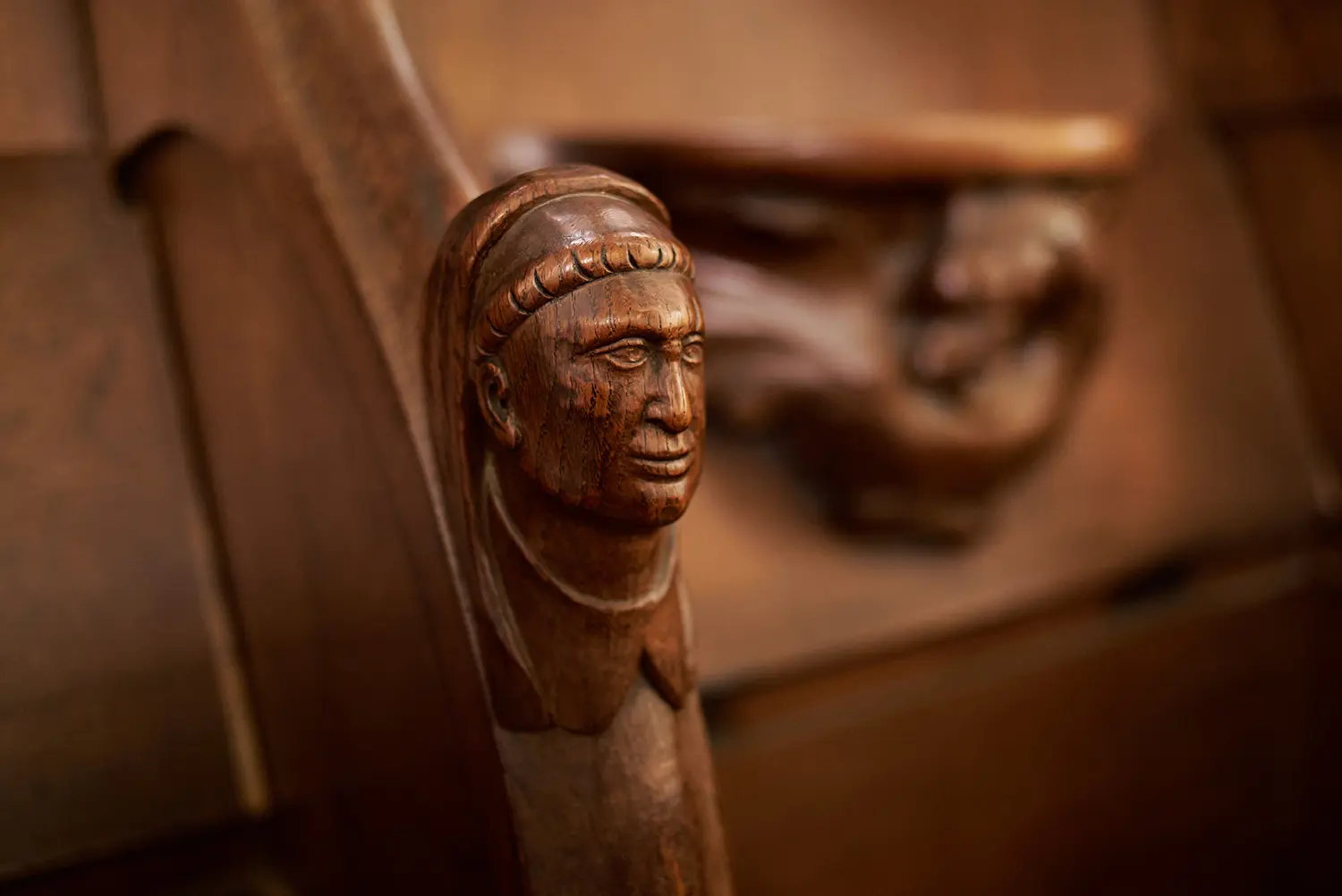
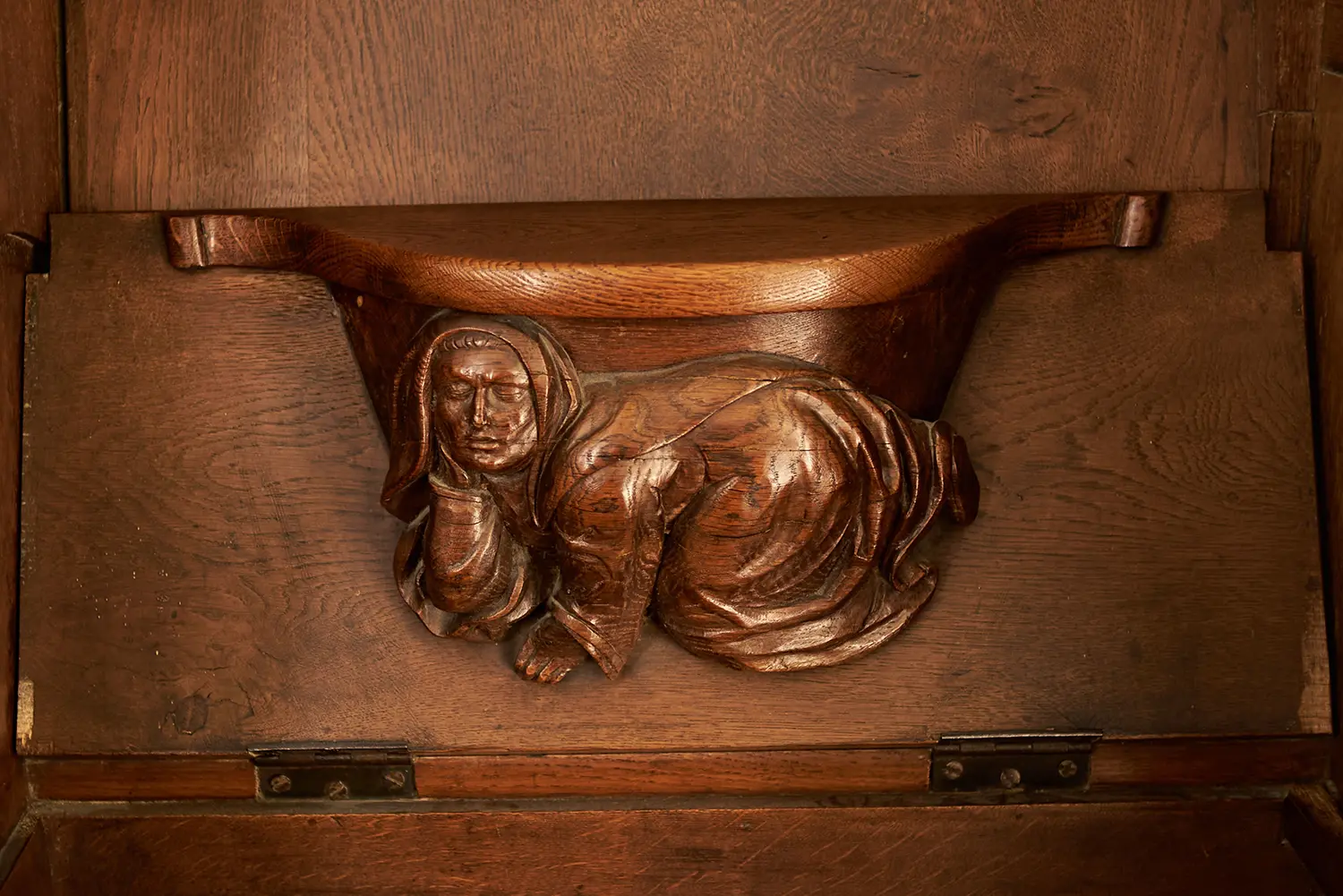
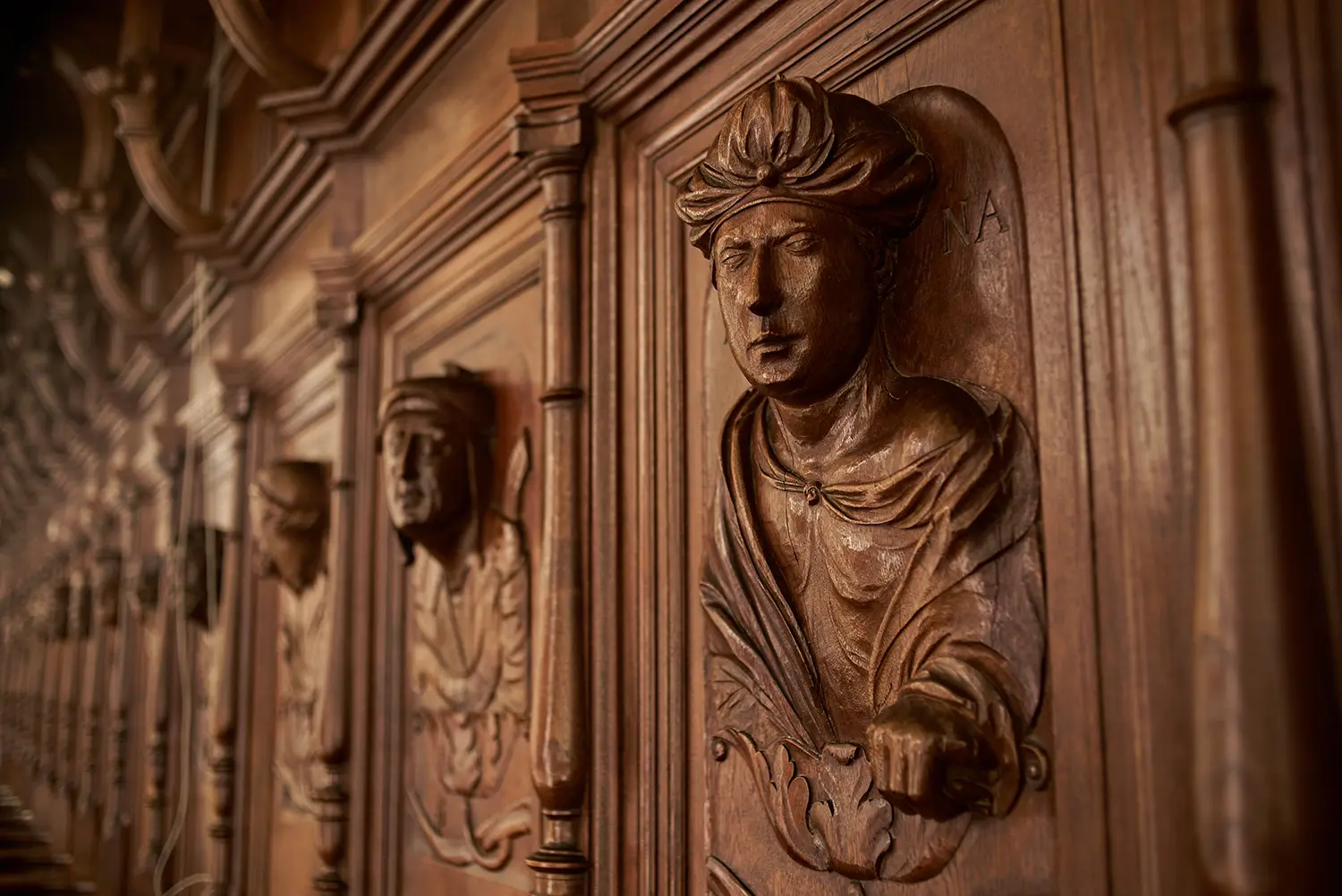
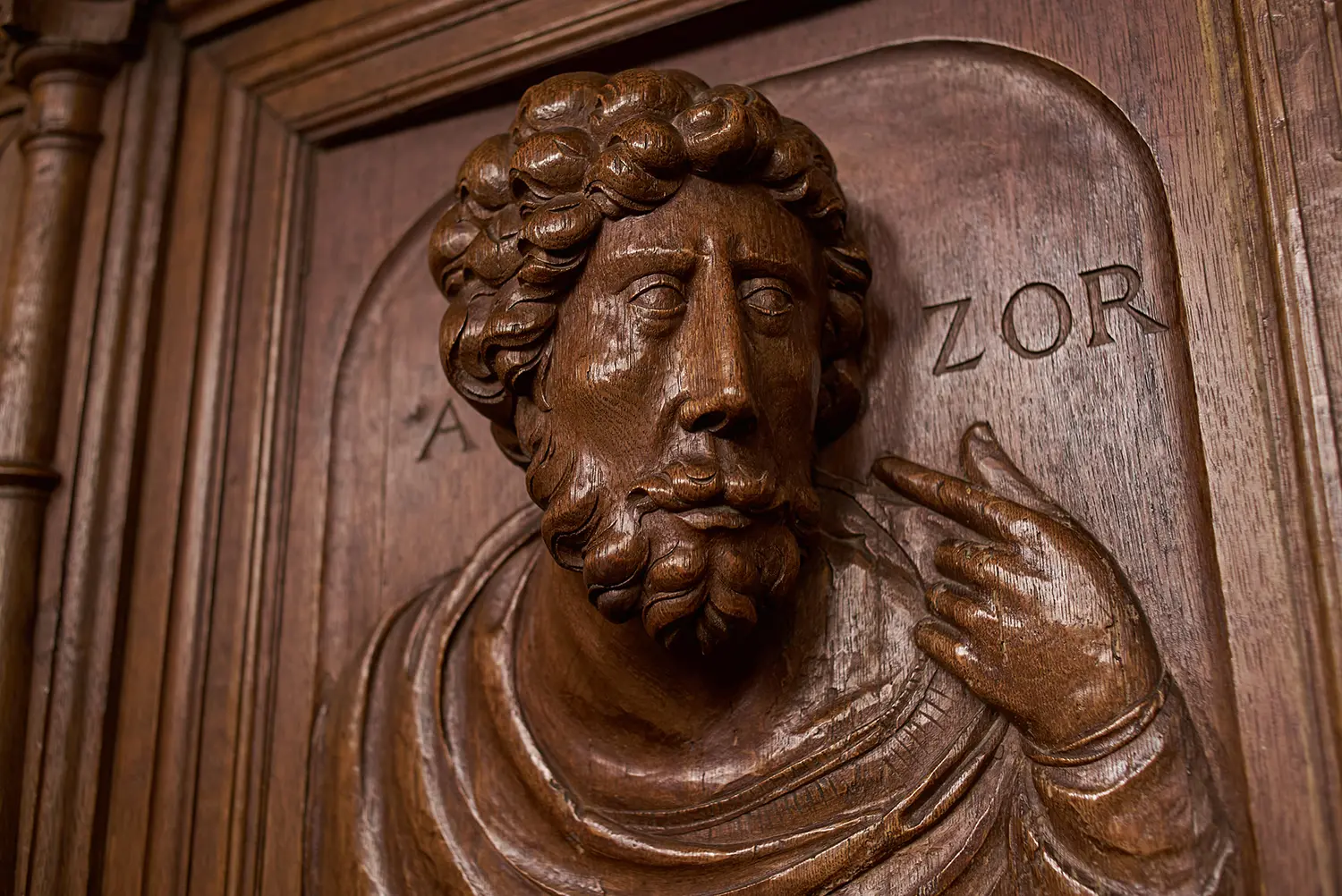
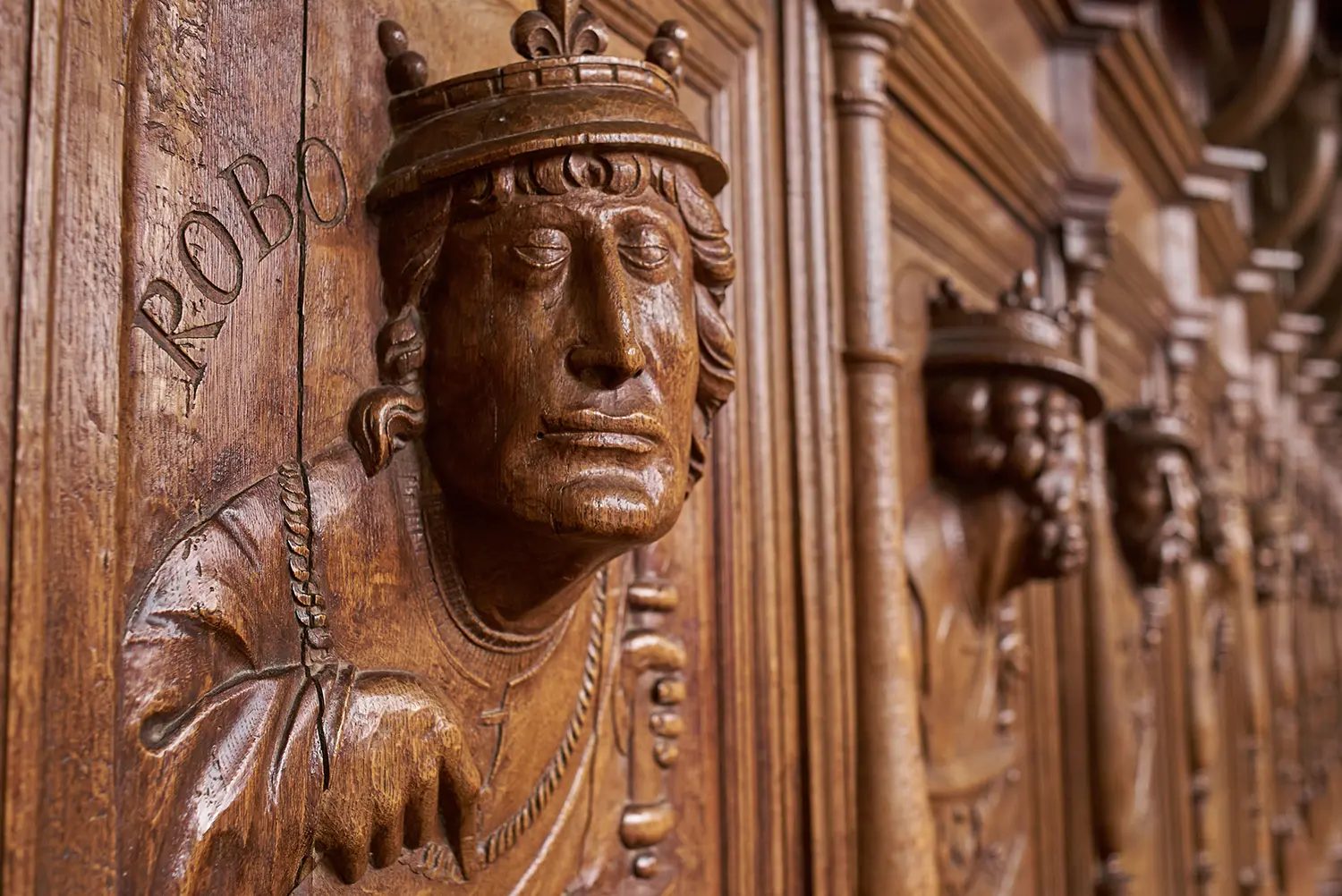
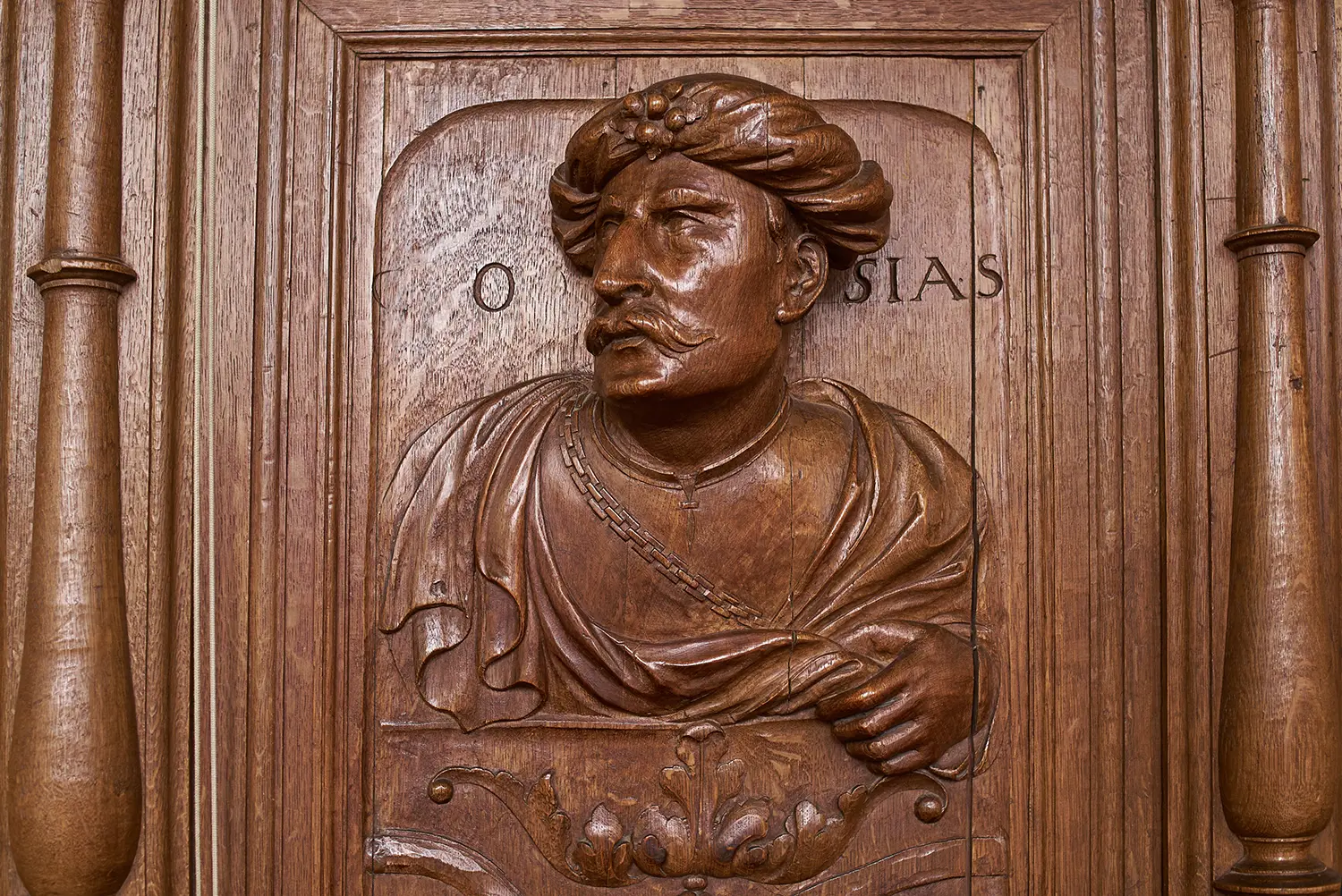
There are sixty-four choir stalls in the choir of our abbey church. Their current layout dates back to 1865, when the new choir was built. Twenty-four of them date from the second half of the 16th century. Originally, they were placed in the nave, in front of the transept, with ten on each side and four at the back, facing the altar. The busts were then arranged in two rows, one above the other.
These figures represent the ancestors of Christ, beginning with Jesse, the father of David. A stem extends from Jesse and, passing from bust to bust, reaches the Virgin Mary holding the infant Jesus. This is the Branch of Jesse, of whom Isaiah had prophesied that he would give birth to the Messiah (Isaiah 11:1). Our choir stalls bring together the ancestors of Christ listed in the genealogy of the Gospel of Matthew (1:1–17) and those of the Gospel of Luke (3:23–38).
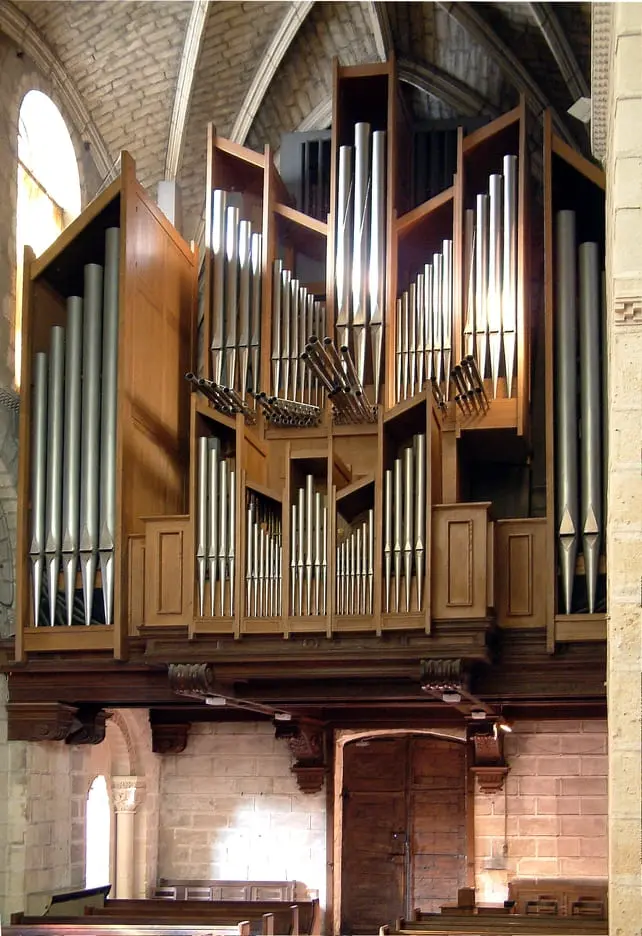
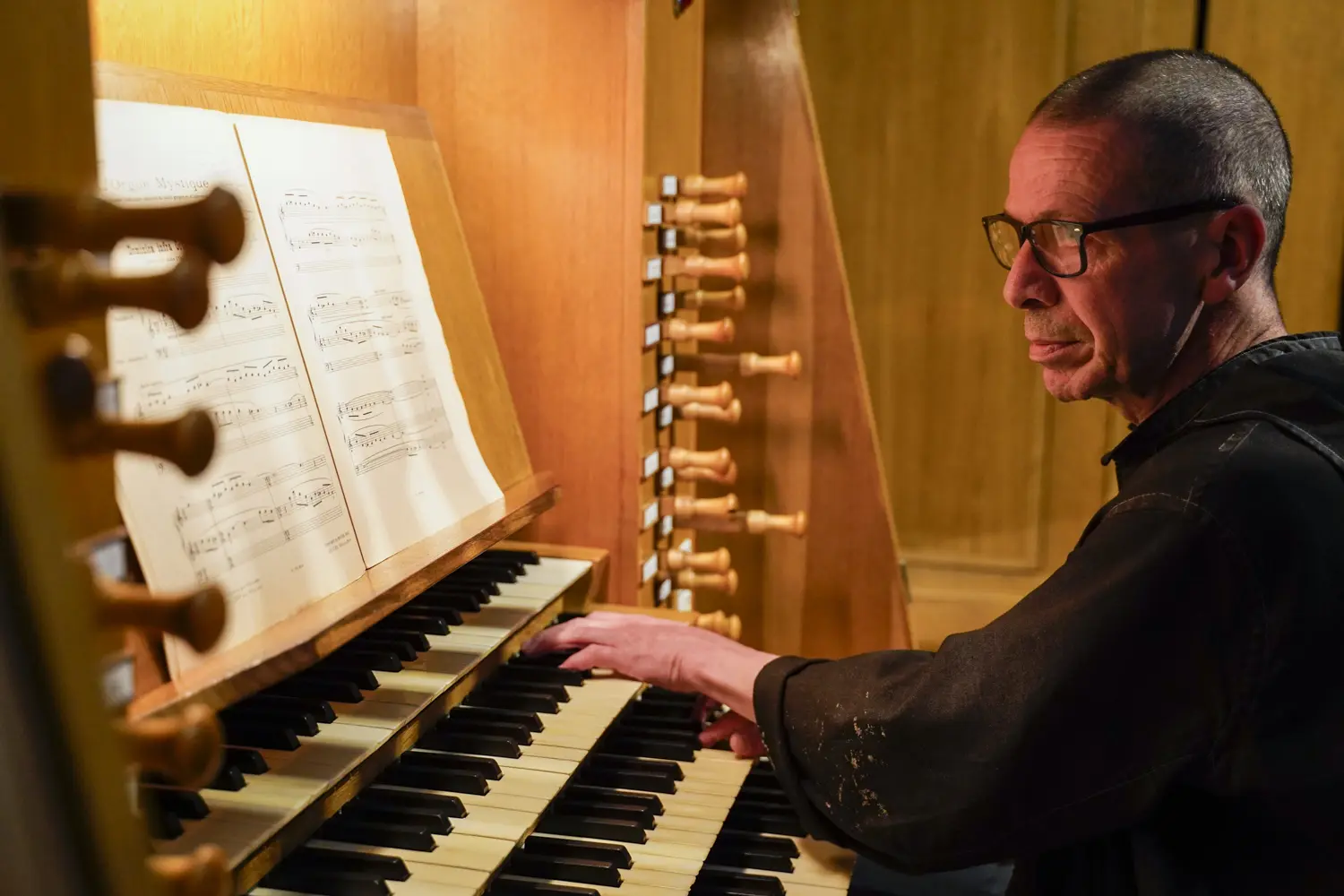
The gallery at the rear of our abbey church was originally home to an organ by Charles Verschneider (1857), followed by a Gonzalez organ inaugurated in 1934. The current 39-stop organ, with mechanical action, was built by the Strasbourg organ builder Curt Schwenkedel. It was blessed by the Abbot, Dom Prou, and inaugurated by Gaston Litaize on 22 October 1967.
The pipework, which reuses some of the material from the previous organs, has been partially modified on several occasions: in 1977 by Pierre Chéron, in 2009 by Denis Lacorre, and in 2010 by Jean-Marie Tricoteaux.
The voicing, carried out by Laurent Steinmetz, is of the ‘plein vent’ type, meaning that the pipe feet are wide open, allowing for the use of relatively low air pressure, which gives this organ great clarity and balance from the bass to the treble. All these features make it possible to perform polyphonic works of all origins. The solo stops provide a delightful finishing touch to this ensemble.
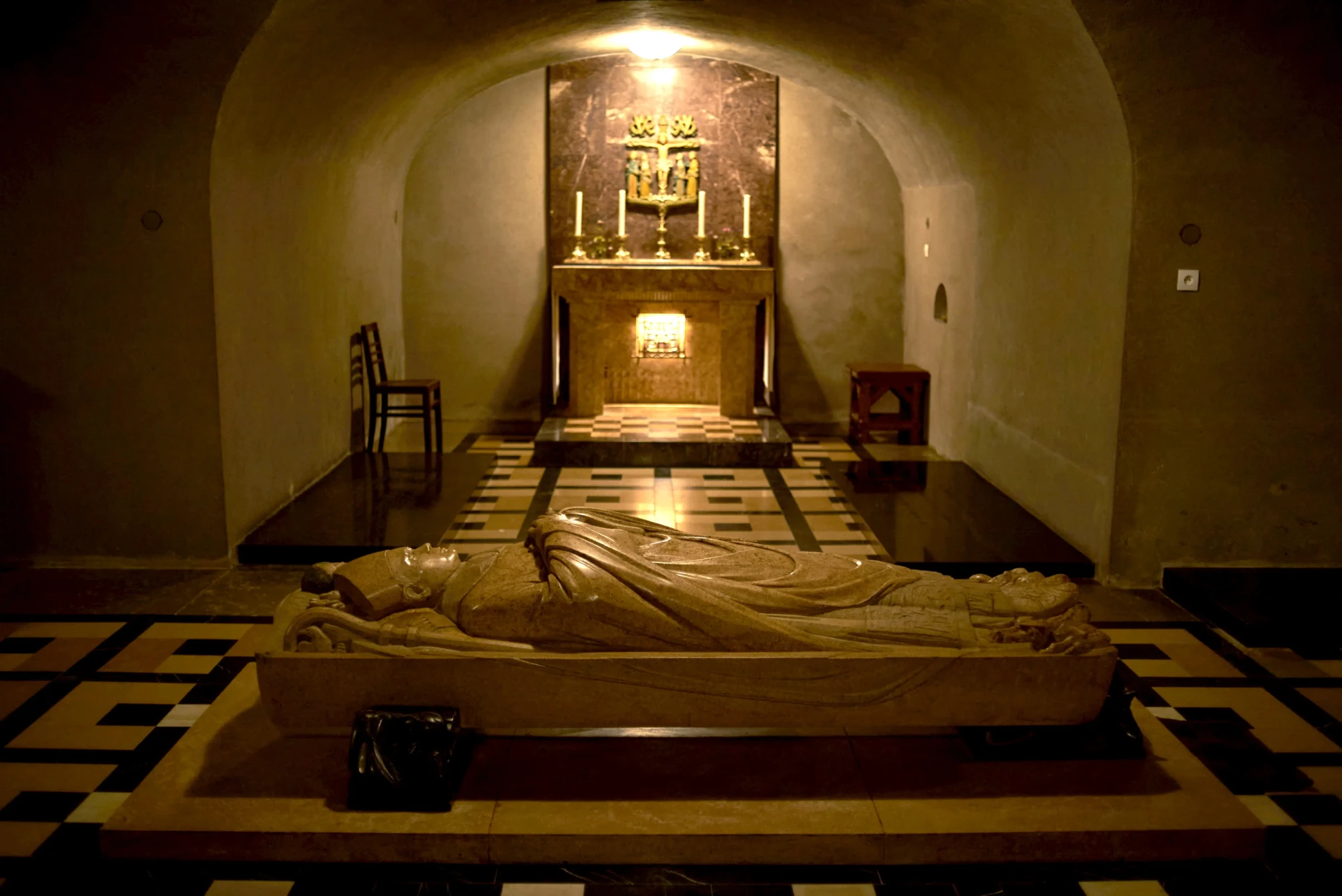
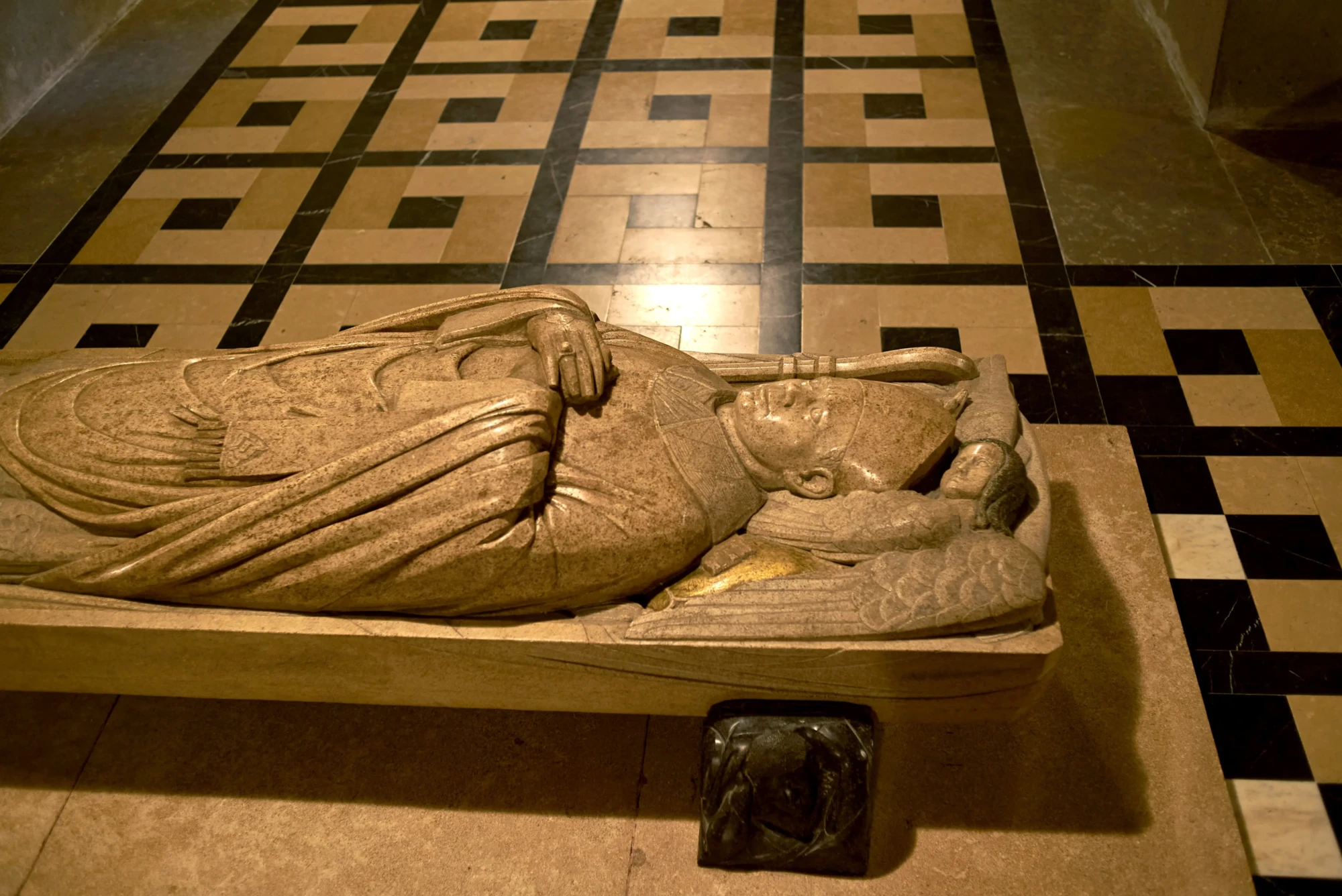
In the crypt of our church, situated beneath the crossing of the transept, the abbots of Solesmes have been laid to rest since the restoration of 1833. In the centre stands the tomb of Dom Guéranger, surmounted by a recumbent statue depicting him in pontifical vestments, a fine work sculpted in 1933 by Henri Charlier (1883–1975). The crypt also houses three altars, including the former high altar of the Maurist priory church, a very fine 18th-century piece carved from black marble.